He helped build the chips that make AI faster. Then he decided AI was already fast enough. This is the Robert O’Callahan Google resignation.
The Robert O’Callahan Google resignation is the latest exit from a frontier AI lab over the pace of the technology. O’Callahan, a veteran engineer based in Auckland, quit Google DeepMind this week. His team was designing a new generation of AI chips, and he says AI is already moving too fast.
Robert O’Callahan Google Resignation: Why He Quit DeepMind
O’Callahan announced the decision on X in a single sentence. “I resigned from Google today,” he wrote. He added that he enjoyed the work and loved the people. However, his team was building chips “to make AI much faster and cheaper,” and he could not square that with his view of where AI is heading.
A longer explanation followed on his personal blog. In his “Goodbye Google” post, he wrote that “AI progress is currently far too rapid.” As a result, a job that speeds it up no longer made sense to him.
He did not frame it as a protest against colleagues. Instead, he described it as a personal line he had to draw once the goal of his project became clear.
Google TPU Chips: What His Team Was Building
O’Callahan did not train models. According to his blog, he worked on hardware chip design tools inside Google DeepMind. OfficeChai and LatestLY describe the same role: tools that help engineers design the silicon AI runs on.
That silicon means Google’s Tensor Processing Units. Google TPU chips are custom accelerators that power Gemini and reduce the company’s reliance on Nvidia GPUs. Every new TPU generation aims to serve models at lower cost and lower latency.
For most engineers, that is a dream brief. For O’Callahan, it was the problem. LatestLY quotes him saying that making AI “cheaper and lower-latency is currently harmful to society.” Cheaper AI spreads faster, and he wants the opposite.

“AI Is Progressing Too Fast”: His Core Argument
The heart of the Robert O’Callahan Google resignation is speed, not a single disaster scenario. In his words, AI is developing faster than humans can individually and collectively understand it.
He lists several risks behind that view. First, there are existential risks from superintelligent systems. Next, he points to economic disruption and what writers call cognitive surrender, where people hand their thinking to machines. He also notes that problems researchers once predicted, like misalignment and reward hacking in models, have already shown up.
Even so, he stays careful about certainty. LatestLY reports that he calls superintelligence risks real but uncertain. Still, Aroged quotes him arguing that aiming for superintelligence soon is “inherently irresponsible.”
Faith, Regulation and Pro-Human Work
O’Callahan is open about his motives. He is an elder and occasional lay preacher at Auckland Chinese Presbyterian Church. In his post, he says his Christian values obliged him to face how his work fed AI acceleration.
He also wants governments to act. National and international regulation, he writes, is “desperately needed.” That puts him closer to policymakers than to the labs racing to ship new models.
Moving to another Google project was not an easy fix either. Because he lives in New Zealand, he says switching teams was impractical. In short, “my hands are tied,” so leaving was the only clean option.
Robert O’Callahan Google Resignation and the Wave of AI Safety Exits
The timing looks pointed. Earlier in September, researcher Jacob Coxon left Anthropic with his own warning about frontier AI. OfficeChai and Aroged both place O’Callahan in that same trend of engineers quitting over safety.
O’Callahan pushes back on that reading, though. He says the date had nothing to do with the recent viral resignations. Instead, he picked it in advance around a long-planned backpacking trip in New Zealand.
Aroged adds that he has held these concerns since November 2025. So the decision was slow and personal, even if it landed in the middle of a very public debate.
Who Is Robert O’Callahan?
O’Callahan is not a newcomer chasing headlines. He spent years at Mozilla before Google, and he created rr and Pernosco, two debugging tools he still maintains.
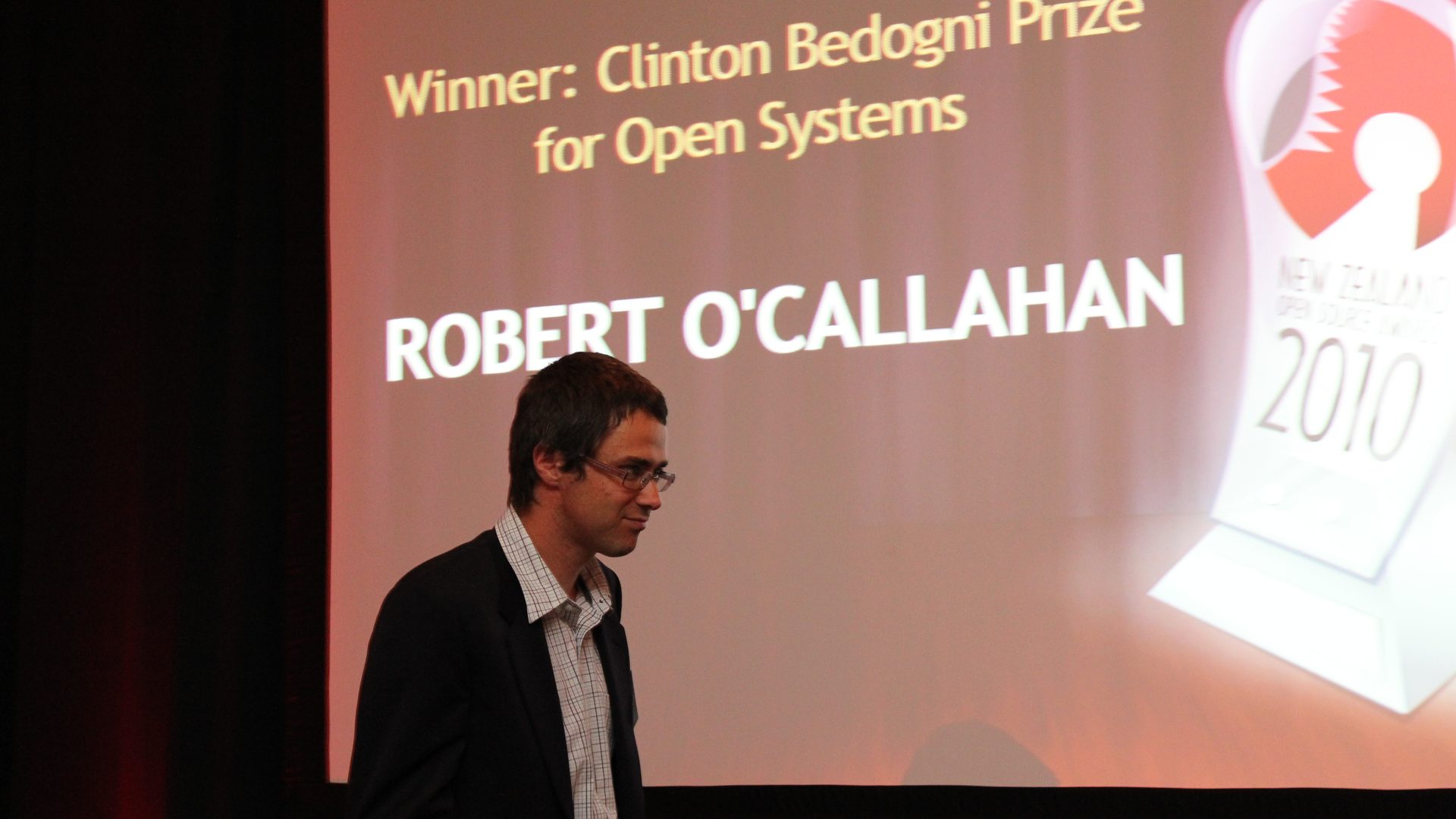
His open source work earned him the Clinton Bedogni Prize for Open Systems at the New Zealand Open Source Awards in 2010. Meanwhile, OfficeChai notes that he deliberately stayed outside Silicon Valley and the rationalist communities that first raised AI risk warnings.
That background matters here. He is a systems engineer who knows how tools shape what people can build, which is exactly why chip design tools worried him.
After the Robert O’Callahan Google Resignation: What Comes Next
He is not leaving software, or even AI entirely. According to his blog, he will keep maintaining rr and Pernosco. He also plans to study how AI agents debug code, so he can make debugging tools better for them.
Beyond that, he mentions other project ideas, “some potentially lucrative, some not.” His one condition is that the next job is “unambiguously pro-human.”
What It Means for Google DeepMind
One engineer leaving will not slow Google’s chip roadmap. Nevertheless, the Robert O’Callahan Google resignation adds a new kind of voice to the safety debate: a hardware tools engineer, not an alignment researcher.
His argument is simple enough for anyone to follow. If AI is already outpacing human understanding, then making it faster and cheaper deepens the problem. Google DeepMind had not publicly responded in the coverage we reviewed.
Want More on Robert O’Callahan Google Resignation?
Read how another insider framed the same fear in our story on Geoffrey Hinton and AI’s labor impact. And if the rr angle caught your eye, compare today’s agents in our list of the best AI coding tools.
Frequently Asked Questions
Who is Robert O'Callahan?
He is a veteran software engineer based in Auckland, New Zealand. He worked at Mozilla, created the rr debugger and Pernosco, and most recently built chip design tools at Google DeepMind.
Why did Robert O'Callahan resign from Google?
In his own words, AI is already progressing too fast. His team was building chips to make AI faster and cheaper, so staying would have meant speeding up something he wants slowed down.
What was Robert O'Callahan working on at Google DeepMind?
According to his blog, he worked on hardware chip design tools. That work supports Google’s next generation of AI chips, which aim to run models at lower cost and latency.
What is Google DeepMind?
Google DeepMind is Alphabet’s main AI research lab. For example, it builds the Gemini models and Veo, and it works closely with the teams designing Google’s custom AI hardware.
What are Google TPU chips?
TPUs, or Tensor Processing Units, are custom accelerators Google designs for machine learning. They power Gemini and reduce the company’s dependence on Nvidia graphics processors.
What will Robert O'Callahan do next?
Mainly, he will keep maintaining rr and Pernosco and study how AI agents debug code. He also has other project ideas, as long as the work is clearly pro-human.
Sources
Robert O’Callahan’s blog, X, OfficeChai, LatestLY, Aroged. *Photos: Robert O’Callahan by Kristina D.C. Hoeppner, CC BY-SA 2.0, cropped and resized. Tensor Processing Unit 3.0 by Zinskauf, CC BY-SA 4.0, cropped and resized.*