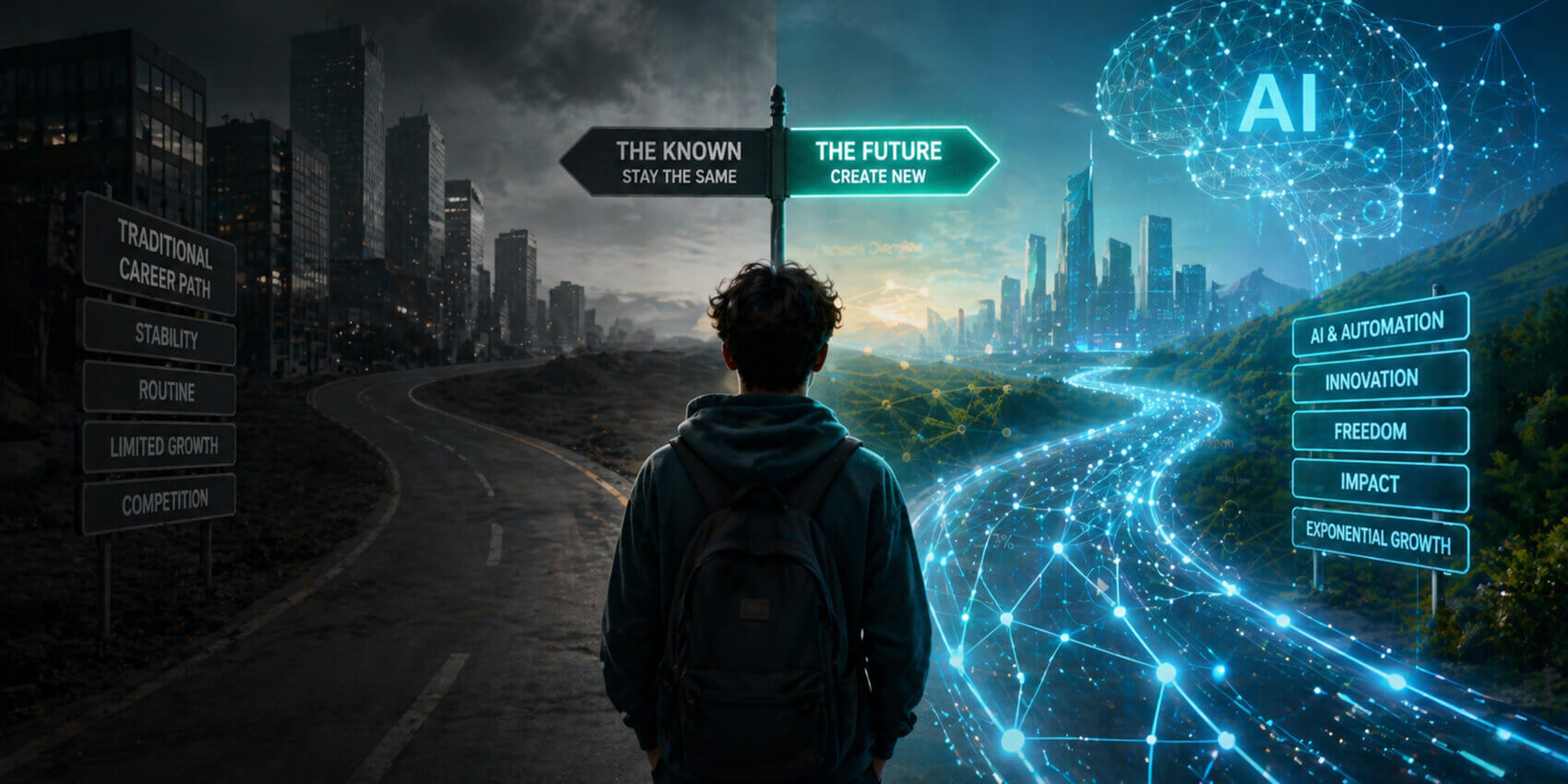
A trillion dollars has to come from somewhere, and the Geoffrey Hinton AI labor impact warning names the source: your paycheck.
The Geoffrey Hinton AI labor impact warning is blunt, and it comes from the man who helped build the technology. Speaking with Senator Bernie Sanders at Georgetown University, the Nobel laureate said mass unemployment now looks very likely. Tech firms are pouring roughly a trillion dollars into data centers and chips. They intend to earn it back by selling software that does a worker’s job for less.
What the Geoffrey Hinton AI Labor Impact Warning Actually Says
Hinton did not hedge. “It seems very likely to a large number of people that we will get massive unemployment caused by AI,” he told the Georgetown audience. Then he explained the business logic behind it.
Ask where the money for those data centers comes back from, he argued, and one answer dominates: selling companies AI that does the work of workers much cheaper. “These guys are really betting on AI replacing a lot of workers,” he said in remarks reported by Fortune. Coming from a 77-year-old Nobel physics laureate who spent a decade at Google, that lands differently than a pundit’s hot take.
Geoffrey Hinton AI Predictions and the Trillion Dollar Bet
The Geoffrey Hinton AI predictions that get quoted most are the near-term ones, because he refuses to pretend anyone can see further. He compared forecasting the field to driving in thick fog. You can see clearly for about 100 yards, and past that the road simply disappears.
Meanwhile the spending keeps climbing. An HSBC analysis from November 2025 suggested OpenAI may not turn a profit until 2030, and that it needs more than 207 billion dollars to sustain its growth. Because of that gap, the pressure to sell labor replacement rather than novelty gets harder to resist every quarter.

Which Jobs the Geoffrey Hinton AI Labor Impact Hits First
Hinton has been consistent about the first casualty: call centers. Customer service work is already going to software, and the current generation of AI chatbot platforms resolves a large share of tickets before a human ever reads them. From there, he expects the list to grow.
Senator Sanders put numbers to a similar fear. His October 2025 committee report estimated that AI, automation and robotics could displace close to 100 million American jobs over the next decade. Those figures model vulnerability rather than certain losses, and committee staff used ChatGPT to classify the roles, so read them as a direction of travel.
Share of roles the Sanders report flags as exposed
Here is how that report ranked five of the occupations it examined.
| Occupation | Share of roles at risk | Type of work |
|---|---|---|
| Fast food and counter workers | 89% | Frontline service |
| Teaching assistants | 65% | Education support |
| Accountants | 64% | White collar |
| Truck drivers | 47% | Transport |
| Registered nurses | 40% | Healthcare |
Why Geoffrey Hinton Left Google to Say This Out Loud
Plenty of researchers share these worries in private. Hinton quit his job so he could say them in public. He resigned from Google in 2023, and he has been candid that the move was about speaking freely rather than about any grievance with the company.
The credentials give the argument weight. His work on backpropagation and neural networks earned him the nickname godfather of AI, and in 2024 he shared the Nobel Prize in Physics. As a result, the industry cannot easily dismiss him as someone who fails to understand the technology.
Geoffrey Hinton Says AI Will Make Most People Poorer
His sharpest line is not about robots at all. “What’s actually going to happen is rich people are going to use AI to replace workers,” he told the Financial Times. “It’s going to create massive unemployment and a huge rise in profits.”
Then came the part that annoyed Silicon Valley. It will make a few people much richer and most people poorer, he said, before adding that this is not AI’s fault but the capitalist system. In other words, he treats the technology as neutral and the distribution as the actual problem.
Geoffrey Hinton Warnings About AI Risks Beyond the Job Market
Washington is starting to echo him, although the numbers vary a lot. Senator Mark Warner has warned that unemployment among recent college graduates could reach 25% within two to three years. He expects that frustration to trigger social disruption without precedent. Sanders wants a robot tax on firms that swap workers for machines, plus a 32-hour workweek.
Not everyone in tech agrees. Nvidia chief Jensen Huang talks about transformation and a four-day week rather than collapse, while Mark Zuckerberg predicts an abundance of jobs nobody has invented yet. Bill Gates and Elon Musk land somewhere stranger, suggesting humans may simply not be needed for most work. These remain competing predictions rather than established facts.
What the Geoffrey Hinton AI Labor Impact Means for Your Career
His practical advice is famously unglamorous: train to be a plumber. Physical trades stay safer for longer because robots remain clumsy in unpredictable spaces, even though he expects models to eventually beat us at everything. Anyone doing mundane intellectual labor, he has said, should feel considerably more nervous.
He does name one exception. Healthcare absorbs the gains instead of shedding staff, in his view, because demand for it is effectively bottomless. If you could make doctors five times as efficient, he argued, we could all have five times as much health care for the same price. Hinton has also pushed UK officials to study universal basic income, while warning that money alone does not replace the dignity people get from work.
Want More on the Geoffrey Hinton AI Labor Impact?
If the warning has you thinking about your own next move, start with the best AI courses for beginners and pick a skill that pairs with what you already do. And when you are ready to move, here is how to use AI for your job search without sounding like everyone else.
Frequently Asked Questions
What is the Geoffrey Hinton AI labor impact warning?
It is Hinton’s argument that mass unemployment is now very likely, because tech firms investing roughly a trillion dollars in data centers and chips plan to recover that money by selling AI that does the work of employees far more cheaply. He made the case in a discussion with Senator Bernie Sanders at Georgetown University.
What does Geoffrey Hinton say about AI and jobs?
He says AI will replace people rather than merely assist them, starting with call centers and other mundane intellectual labor. Crucially, he doubts that enough new job categories will appear to absorb the displaced, and he treats the transition period as the most damaging part.
Why did Geoffrey Hinton leave Google?
Hinton resigned in 2023 so he could speak publicly about the risks of AI without those views being attached to his employer. By his own account, the decision was about freedom to talk rather than a dispute with Google.
Why is Geoffrey Hinton called the godfather of AI?
The nickname comes from his foundational research on backpropagation and neural networks, the techniques that made modern deep learning possible. He shared the 2024 Nobel Prize in Physics for that body of work.
Which jobs does Geoffrey Hinton think are safest from AI?
Skilled physical trades such as plumbing, because AI is still poor at physical manipulation in unpredictable environments. He also singles out healthcare, arguing that demand is elastic enough to absorb efficiency gains instead of cutting staff.
What are Geoffrey Hinton’s AI predictions for the next few years?
Hinton expects models to keep improving quickly and to become capable of replacing many more roles, well beyond the call center work they already handle. Beyond a year or two he refuses to predict, comparing the view to driving in thick fog where you can see clearly for about 100 yards.
*Sources: International Business Times UK, Common Dreams, Sanders.senate.gov, CNBC, Bloomberg, best-ai.news.* *Photo: SD 2025 – Geoffrey Hinton 05 by Xuthoria, CC BY-SA 4.0, cropped and resized.*