For the first time, unrolling Vesuvius papyrus with AI let a charred scroll speak after 2,000 years.
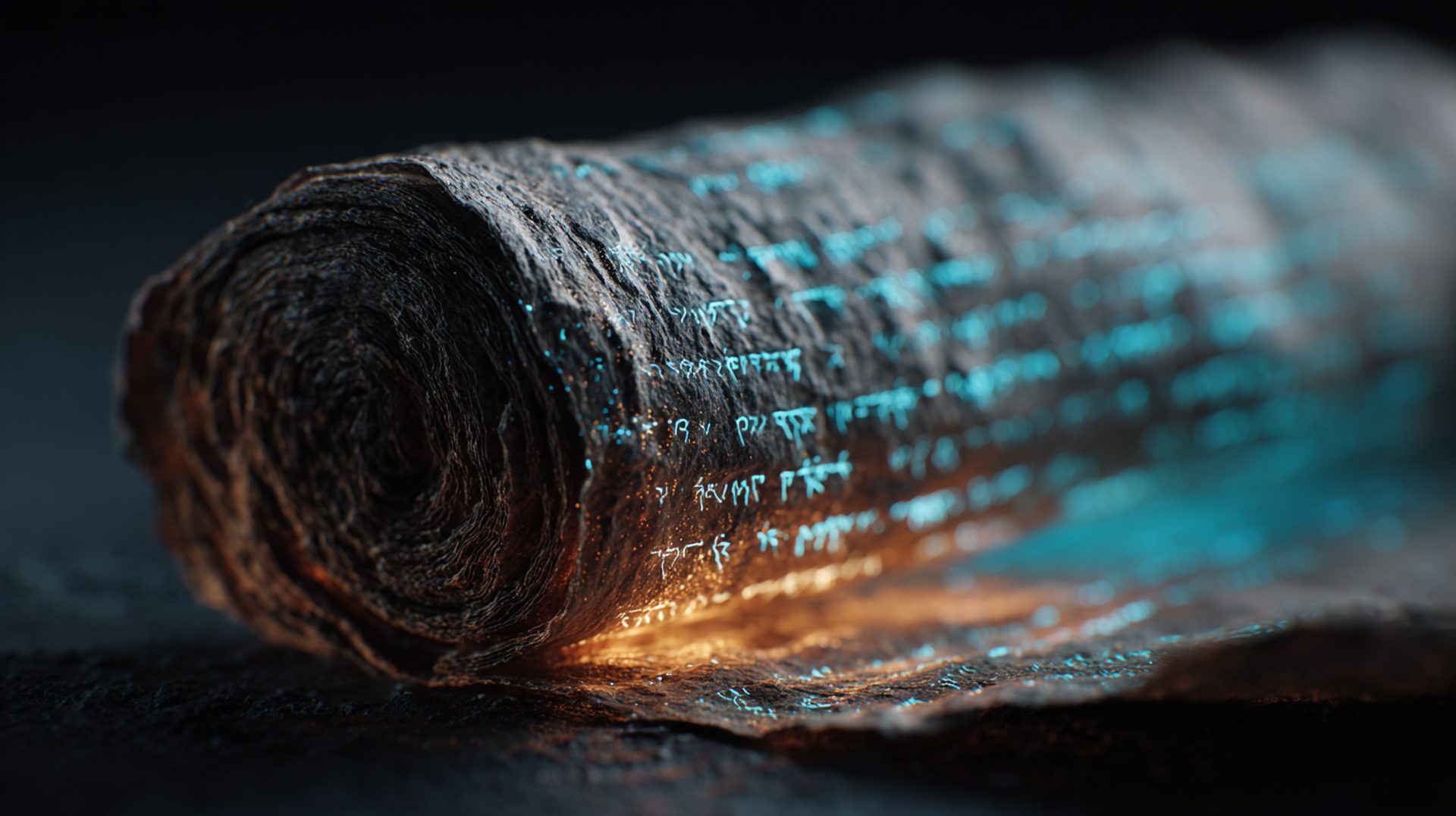
Unrolling Vesuvius papyrus with AI has done what fire, time, and careful hands never could. On June 26, 2026, researchers announced they had fully read a carbonized Herculaneum scroll: known as PHerc. 1667, without ever physically opening it. The fragile roll has stayed sealed since Mount Vesuvius buried the Roman town in AD 79. Now, thanks to high-resolution scans and machine learning, its hidden Greek text is readable again.
Unrolling Vesuvius Papyrus With AI: What Scientists Just Did
A team unveiled the breakthrough at a conference in Naples. They virtually unwrapped the scroll and revealed about 22 columns of ancient Greek, spread across roughly 4.6 feet (1.4 meters) of papyrus. Crucially, the scroll was never touched by a blade.
Instead, scanners captured the roll in fine detail, and software rebuilt it layer by layer. AI models traced the faint outline of ink that human eyes simply cannot see. As a result, a 2,000-year-old book that looked like a lump of charcoal turned back into a page of philosophy.
“These unopened Herculaneum Scrolls look like dead books, but they’re not,” said papyrologist Federica Nicolardi of the University of Naples Federico II. “They’re starting to speak again.”
Inside the Vesuvius Challenge
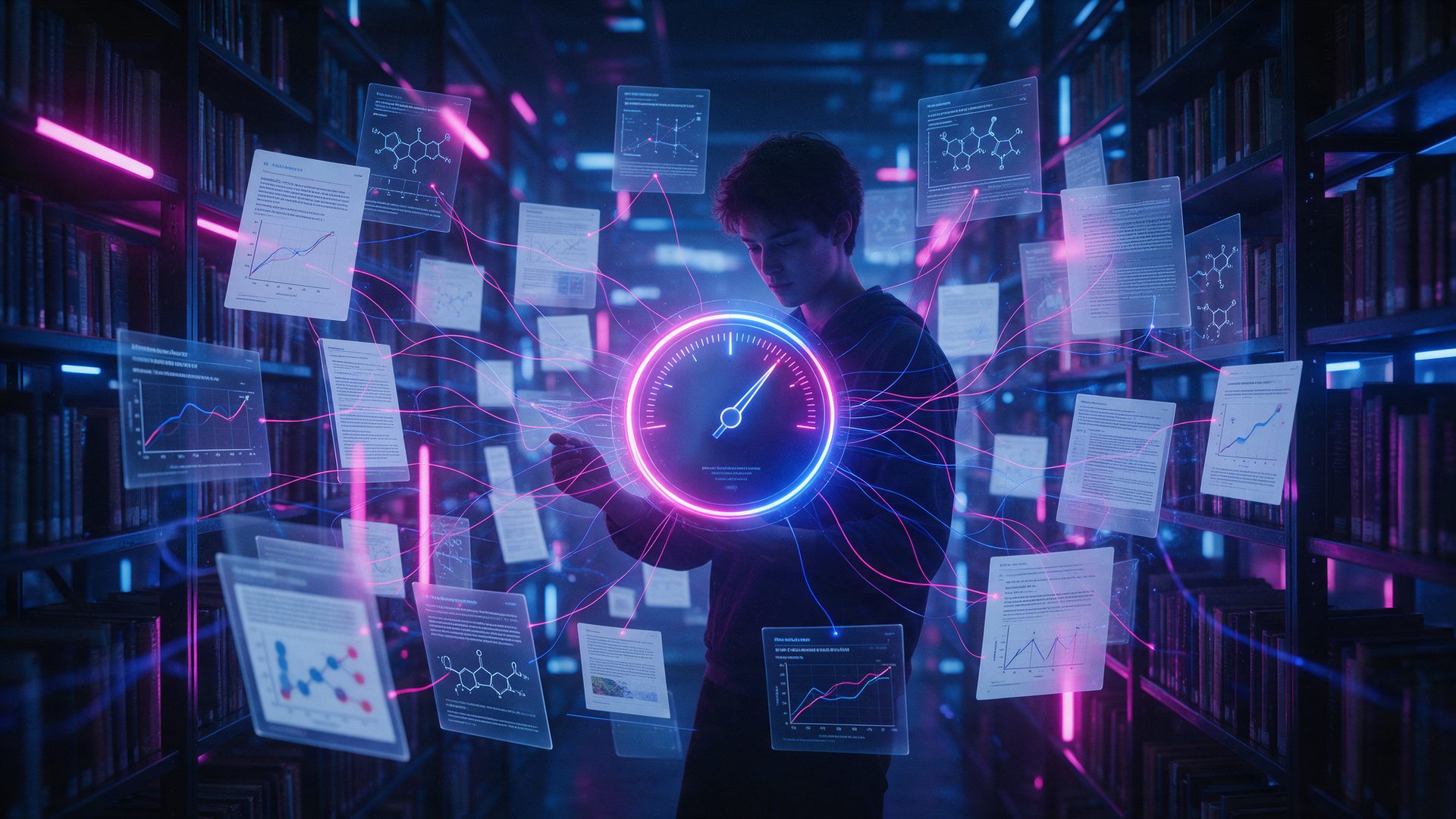
This result is the latest milestone for the Vesuvius Challenge, a global competition launched in 2023. The contest invites coders and researchers to decipher the carbonized Herculaneum scrolls using machine learning, and it has handed out major cash prizes along the way.
Computer scientist Brent Seales of the University of Kentucky co-founded the effort. For years, his lab refined “virtual unwrapping,” a method that turns a dense X-ray scan into a flat, readable surface. The latest Vesuvius Challenge results push that idea from a few words to a near-complete scroll.
Importantly, the win is a team sport. Synchrotron physicists handle the scanning, machine-learning engineers chase the ink, and papyrologists confirm every line. AI finds the letters, but human experts still read them.
In short, unrolling Vesuvius papyrus with AI now runs as a repeatable pipeline rather than a one-off stunt.
What the Herculaneum Scrolls Say After 2,000 Years
So what do the Herculaneum scrolls say? PHerc. 1667 turns out to be a treatise on Stoic ethics. It explores human nature, impulse, and the slow climb toward moral progress: themes that still feel modern.
Notably, the text even name-checks Aristocreon, a nephew of the famous Stoic philosopher Chrysippus. That single detail helps scholars place the work inside a known tradition. For historians, it is the kind of clue that reshapes a whole family tree of ideas.
Most of these rolls come from the Villa of the Papyri, a private library near Pompeii. It is the only intact library to survive from the ancient world, which is exactly why each recovered scroll matters so much.
How AI Reads Charred Herculaneum Scroll Text
The carbon ink sits on carbon-black papyrus, so there is almost no contrast. That is why opening the scrolls by hand destroyed so many in the past. Reading the herculaneum scroll text without unrolling it sounded impossible for centuries.
Researchers solved it in stages. First, a particle accelerator (the European Synchrotron Radiation Facility in France) X-rayed the roll at microscopic resolution. Next, software unrolled the scan into flat sheets. Then neural networks learned to spot the subtle texture where ink once sat.
Because the method never touches the original, it is fully non-invasive. The scroll stays intact for future tools, which will almost certainly be sharper still.
Ultimately, that loop (scan, virtually unroll, then predict the ink) is the whole idea behind unrolling Vesuvius papyrus with AI.

From Luke Farritor’s First Word to a Full Scroll
It helps to remember how fast this moved. In 2023, student Luke Farritor read the first full word from an unopened scroll: porphyras, ancient Greek for “purple.” That tiny win proved the approach could work.
Within a year, teams jumped from one word to hundreds, then to entire columns. Now, in 2026, researchers have read a complete scroll end to end. Each round of the Vesuvius Challenge has roughly doubled what AI can pull from the dark.
Meanwhile, the tools keep getting cheaper and faster. What once demanded a synchrotron and a small army may soon run on far more modest hardware.
Even so, unrolling Vesuvius papyrus with AI is only ever as good as the scan feeding it, so better imaging still drives every leap.
Why Unrolling Vesuvius Papyrus With AI Matters
This is bigger than one scroll. The Villa of the Papyri may hold hundreds more rolls still in the ground. If every one can be read, AI could hand us a flood of lost Greek and Roman writing: philosophy, poetry, and history long thought gone forever.
It also fits a wider pattern. AI is quietly becoming an archaeologist’s favorite tool. Old mysteries keep falling to new math.
According to CNN, the team plans to scale the technique to more scrolls from the same library. In short, the readable past just got a lot larger.
What Unrolling Vesuvius Papyrus With AI Could Read Next
The obvious next step is volume. With six Herculaneum scrolls already scanned and more waiting, the bottleneck is shifting from reading to transcribing. Expert papyrologists are now the rare resource, not the technology.
Researchers also want to push image quality so faint letters resolve on the first pass. Better models mean fewer guesses and faster results. Therefore, the gap between scanning a roll and reading it should keep shrinking.
For now, one charred lump has become a chapter of Stoic thought. And the same playbook is ready for the next roll in line.
Want More on Unrolling Vesuvius Papyrus With AI?
If watching AI crack the ancient world fascinates you, keep going. Plenty of readers now ask AI how pyramids were built, and the same curiosity fuels this story. From there, see how the Trump AI Genesis Mission is speeding up scientific discovery. The past and the future are both getting easier to read.
Frequently Asked Questions
What is the Vesuvius Challenge?
The Vesuvius Challenge is a global competition launched in 2023 that rewards researchers for deciphering the carbonized Herculaneum scrolls with machine learning. It blends high-resolution X-ray scans, AI, and expert papyrologists to read rolls that are far too fragile to open.
What do the Herculaneum scrolls say?
So far, the deciphered scrolls contain Greek philosophy. The newest one, PHerc. 1667, is a treatise on Stoic ethics covering human nature, impulse, and moral progress, and it mentions Aristocreon, a nephew of the Stoic philosopher Chrysippus.
How does unrolling Vesuvius papyrus with AI actually work?
Scientists scan the sealed scroll with a particle accelerator, rebuild its layers in software, then use neural networks to detect faint traces of ink. Scientists never open the original scroll, so the method stays completely non-invasive.
How many Herculaneum scrolls are there?
Excavators pulled around 1,800 carbonized scrolls from the Villa of the Papyri near Pompeii. Most remain unread, which is why a reliable way to read them without opening them is such a big deal.
Who is Luke Farritor?
Luke Farritor is the student who, in 2023, read the first full word from an unopened Herculaneum scroll: porphyras, Greek for purple. His result helped prove that AI could recover the hidden text.
Will AI read all of the Herculaneum scrolls?
That is the goal. Now that the technique can read a full scroll, teams plan to scale it across the library. The main limit is the number of expert papyrologists available to verify each line.
*Sources: People, Gizmodo, Free Press Journal, Greek Reporter, Vesuvius Challenge.*