One weekend post promised a new branch of government for artificial intelligence. Here is what the Trump AI Force actually says.
The Trump AI Force arrived the way most things do now, as a post on Truth Social. On Saturday, September 19, 2026, the president said he was forming it and would soon name an AI czar. He gave no structure, no budget and no timeline. However, he was perfectly clear about one thing: Washington will not slow the industry down.
What Trump Said About the Trump AI Force
The announcement came in a single weekend post. “I am forming the AI Force, much like I did Space Force, which has been a tremendous SUCCESS,” Trump wrote. He then promised the czar job would follow, adding that “Only High I.Q. individuals need apply!”
Beyond the comparison to Space Force, no detail followed. Reporting on the post noted that the president described neither the structure, the authority nor the membership of the new body. In other words, the name exists and the plan does not.
The tone, though, was unmistakable. “We will not in any way hinder or stifle the Growth of this incredible Industry,” he wrote, promising instead to “cherish it, help it, and watch over it, as it grows!”
Who Is the AI Czar, and Who Had the Job Before
Nobody has the job yet. Trump said the AI czar would be named “in the near future” and floated no candidate at all. As a result, the most useful guide to the role is the person who last held it.
That was David Sacks, the venture capitalist who served as both AI and crypto czar. He stepped down earlier in 2026, because the rules limit how long a special government employee may serve. Since then he has stayed on as an outside adviser and chairs the president’s council on science and technology, Al Jazeera reported.
That history matters for a simple reason. The czar post has always been an advisory seat inside the White House, not a regulator with staff and subpoena power. Nothing in the weekend post suggests the second version will differ.
Donald Trump AI Regulation Stance: No New Guardrails
The clearest part of the post was the part about rules. Trump said bad behaviour would be handled through the criminal and civil courts the country already has, rather than through new restrictions written for AI.
In practice, that is a refusal. Congress has spent the year arguing about what federal AI rules should look like, from state pre-emption to outright bans on specific systems. Senator Bernie Sanders went furthest with his bill to ban artificial superintelligence, and the White House has backed none of it.
So the phrase people keep searching for, Trump AI guardrails, currently has an answer. There are none coming from this administration, and the AI Force is not being built to write them.

Why Trump Called the AI Warnings a Hoax
The announcement did not appear in a vacuum. Over the previous two weeks, senior figures across the AI industry had publicly asked for the pace of development to ease, warning that safety work was falling behind capability.
Trump dismissed that argument as a “hoax”. He used the word on a September 16 call with Nvidia chief executive Jensen Huang, three days before the AI Force post. Meanwhile his position never moved: the priority is for the United States to lead, and caution is what costs you the lead.
Not everyone in Washington shares that reading. Geoffrey Hinton, the Nobel laureate often called a godfather of the field, told lawmakers at a closed-door briefing this week that Congress has “maybe a year” to regulate the industry properly.
The China Argument Behind the Trump AI Force
Strip away the branding and one argument carries the whole announcement. Trump frames AI as a race the country is currently winning. “We are leading China, and the rest of the World, and I intend to keep it that way!” he wrote.
He paired that with an economic claim. AI, he said, could eventually account for as much as 25 percent of American GDP. He offered no source for the figure, and no economist has put the number that high.
Still, the logic is consistent. If AI is both a race and a quarter of the economy, then every rule is a handicap. That is why the Trump AI Force is pitched as protection for the industry rather than oversight of it.
How the Week Built Up to the Announcement
The post landed at the end of a week in which the argument over AI safety got louder on both sides. Here is the sequence, with the outlet that reported each step.
| Date (2026) | What happened | Reported by |
|---|---|---|
| Earlier in 2026 | David Sacks leaves the AI and crypto czar role, stays as adviser | NBC News |
| Early September | AI industry leaders publicly call for a slowdown in development | Al Jazeera |
| Sept 16 | Trump calls the safety warnings a hoax on a call with Jensen Huang | Al Jazeera |
| Week of Sept 14 | Geoffrey Hinton tells lawmakers Congress has maybe a year | NBC News |
| Sept 19 | Truth Social post: AI Force, plus an AI czar to be named | Fox News, Al Jazeera |
| Still open | Structure, powers, budget and membership of the AI Force | Fox News |
Read together, the table shows a split rather than a debate. The industry and the researchers moved one way over those two weeks, and the White House moved the other.
What the Trump AI Force Could Actually Do
Space Force took an act of Congress, a budget line and years of staffing. Nothing similar has been proposed here, so treat the military comparison as branding rather than a plan.
Realistically, the most likely shape is a coordinating body inside the executive branch, chaired by the new czar. Such a group can set procurement priorities, align agencies and clear obstacles for data centres and chips. It cannot write binding rules on its own.
Because of that, the next real signal is the appointment, not the slogan. Whoever takes the czar job tells you whether the AI Force leans toward industry policy, national security or simple publicity.
Want More on the Trump AI Force?
For the other side of this fight on Capitol Hill, read how senators pushed back on antitrust relief for AI firms. And for the safety warnings the president waved away, see why an Anthropic researcher quit over out-of-control AI fears.
Frequently Asked Questions
What is the Trump AI Force?
It is a body the president says he is forming to oversee the AI industry, announced on Truth Social on September 19, 2026. No structure, budget, powers or start date have been published yet.
Who is Trump’s AI czar?
Nobody yet. Trump said he would name one soon. David Sacks held the AI and crypto czar role before stepping down earlier in 2026, and he now advises from outside the administration.
What is Donald Trump’s AI regulation stance?
Against new rules. His post promised not to hinder or stifle the industry, and said existing criminal and civil law should deal with bad behaviour instead of AI-specific restrictions.
Why did Trump call the AI warnings a hoax?
Because he treats the risk argument as a brake on American leadership. He used the word on a September 16 call with Nvidia chief Jensen Huang, days after industry leaders asked for a slowdown.
Will the AI Force add new AI guardrails?
Nothing suggests it will. The announcement framed the group as protection for the industry, and an executive body of this kind cannot write binding rules without Congress acting first.
How does China fit into the plan?
It is the core argument. Trump says the United States leads China and intends to keep it that way, and he claims AI could reach 25 percent of American GDP, a figure he did not source.
Sources
Al Jazeera, Fox News, NBC News.
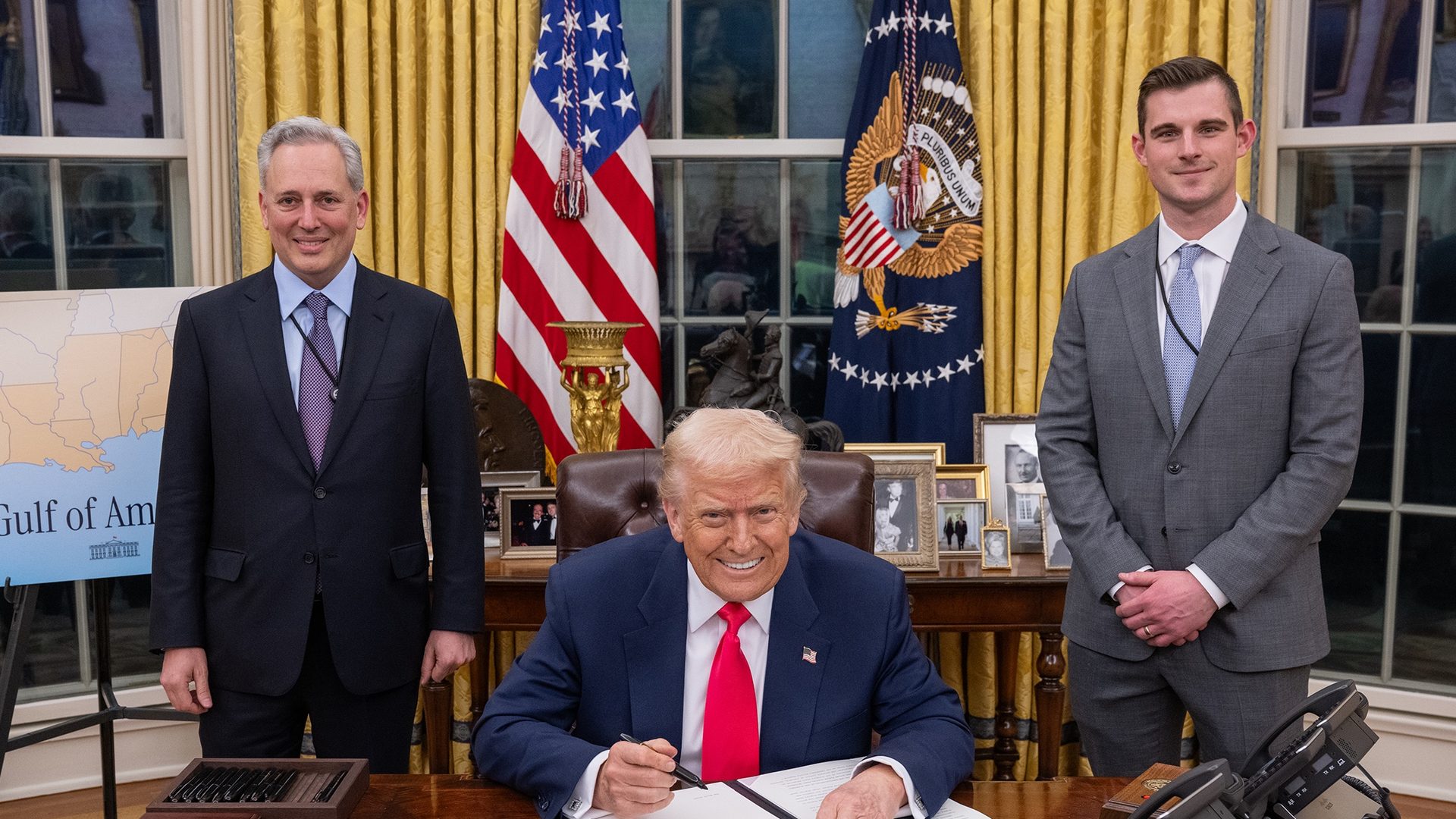
*Photos: Donald Trump with David Sacks and Bo Hines by The White House, public domain, cropped and resized; President Trump signs the Executive Order on Maintaining American Leadership in Artificial Intelligence by The White House, public domain, cropped and resized.*