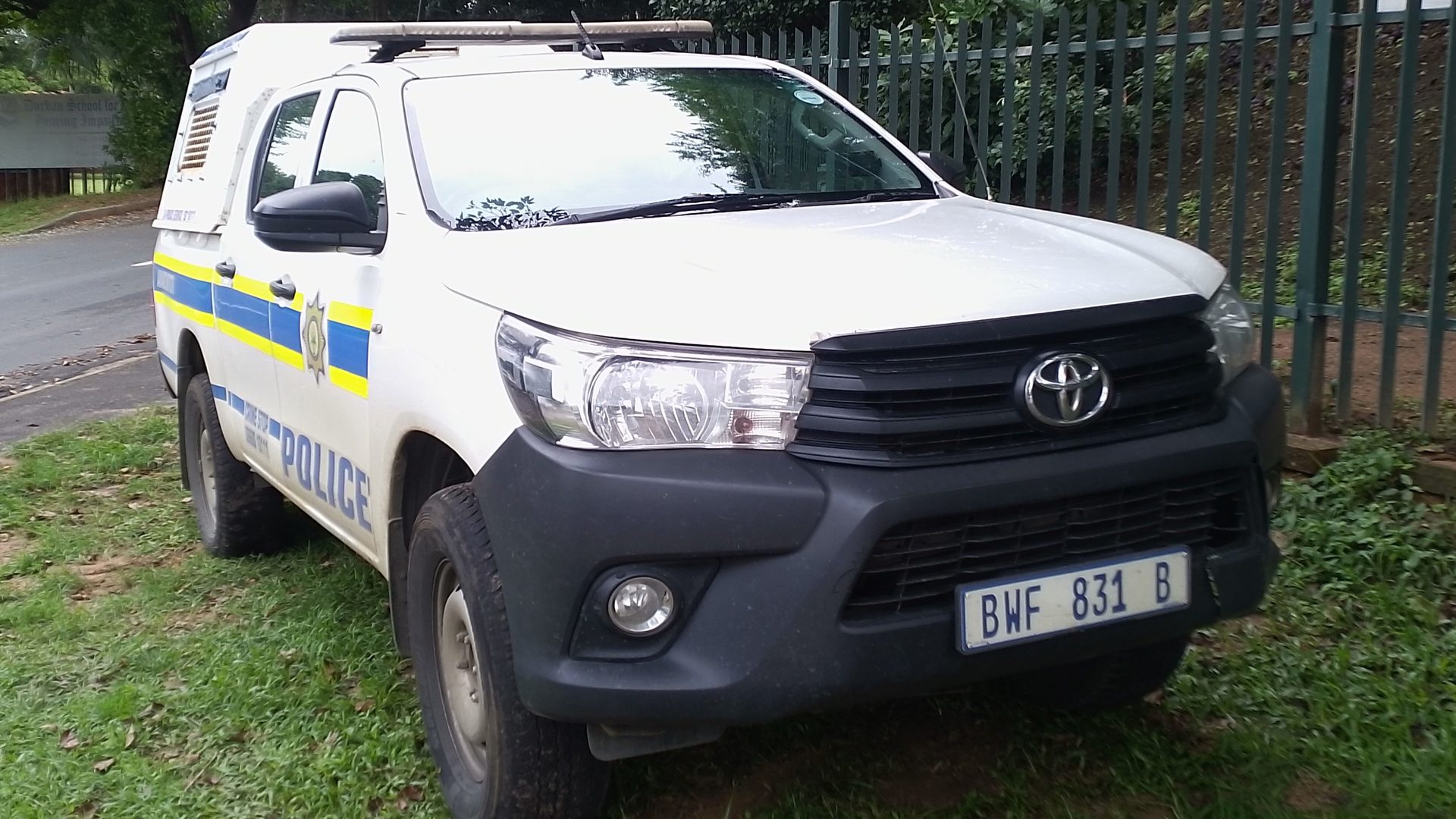
An AI portrait in a police uniform can look like harmless fun. South African police now say sharing one could end in court. That is the core of the SAPS AI police badge warning.
The SAPS AI police badge warning came from Brakpan in Gauteng this week. Police there noticed AI posters and videos carrying the South African Police Service badge on social media. They say unauthorised use breaks the SAPS Act and can bring a fine or up to six months in prison. However, making an image alone is not automatically a crime.
SAPS AI Police Badge Warning: What Brakpan Police Said
According to IOL, SAPS Brakpan spotted AI-generated content with the badge circulating online. The statement came out on Wednesday, and South African outlets carried it from Thursday. The station described the badge as a symbol of authority and public trust.
In short, its concern is simple. Misuse can confuse people about what is real and who actually speaks for the police. “This unauthorised use of the SAPS badge is a direct contravention of the SAPS Act,” the statement said, as quoted by African Insider.
Coverage so far names no officer, no suspect and no specific AI app. Likewise, none of the reports mentions any charges. So for now, this is a public warning rather than a reported prosecution.
Section 68(3) of the SAPS Act 68 of 1995
The legal basis is the South African Police Service Act 68 of 1995. As IOL describes it, section 68(3) covers anyone who uses the SAPS badge or name without the National Commissioner’s approval. It also covers people who lead others to believe they are linked to the service.
Joburg ETC adds that the approval must be written. In the words SAPS used, “Anyone found guilty could face a fine or direct imprisonment for a period of up to six months.”
Meanwhile, the badge has its own protection. SAnews reports that SAPS registered it with the Bureau of Heraldry on 31 October 1995. As a result, nobody can copy, alter or use it without permission, and that includes personal social media profiles.
What Counts as Unlawful Use of AI Police Images
First, the reports list several kinds of conduct. Together they show how wide the warning is, since it reaches well beyond fake officers on the street. The table below sums up what SAPS said, as reported by each outlet.
| Conduct | Position reported | Reported by |
|---|---|---|
| Using AI to make a face look like an officer | Listed as unlawful use | IOL |
| AI images of police arrests, including fictional ones | Listed as unlawful use | IOL, Joburg ETC |
| Posters or videos with SAPS badges or uniforms | Listed as unlawful use | Joburg ETC |
| Suggesting SAPS endorsement without approval | Listed as unlawful use | Joburg ETC |
| Images mistaken for official police documents | Flagged as prohibited | African Insider |
| Creating an AI image and nothing more | Not automatically an offence | IOL, ITWeb |
Note the tension in that list. Some entries sound absolute, yet police also say context decides the outcome. The next section explains why both can be true.

Is It Illegal to Make an AI Police Photo in South Africa?
Not on its own, according to SAPS. “Simply creating an AI image does not automatically mean that a person has committed a crime,” the service said in comments reported by ITWeb. Instead, intent and use carry the most weight.
IOL puts it in similar terms. Police will first assess whether the creator meant to deceive people or impersonate an officer. Distributing unauthorised content, on the other hand, could lead to arrest.
So the practical line falls between a private experiment and a public post that fools someone. That line can still be blurry, because a joke shared with friends can spread far beyond them. Of course, this is a report of what police said, and a lawyer is the right person for advice on a specific case.
The SAPS AI Police Badge Warning Started in the Free State
Brakpan is not the first station to raise this. In early September, SAPS in the Free State warned people against using AI and face-swap apps to picture themselves in uniform or under arrest. SAnews reported that statement on 5 September.
Provincial Commissioner Lieutenant General Thabang Lesia framed it around trust. “The SAPS uniform represents authority and public trust and should not be used as a costume or to create a false identity,” he said. His closing line was shorter: “Think before you post.”
The Free State notice also pointed to section 66, which deals with uniforms, badges and insignia. Separately, National Instruction 5 of 2017 restricts how officers themselves post in uniform on private accounts. Therefore, the rules apply to members of the service as well as the public.
Why Fake Arrest Images Worry Police
Above all, arrest pictures get special attention. An image of someone in handcuffs can suggest a crime that never happened. SAPS says such pictures could mislead, embarrass or harm a person. It also warns that people can easily mistake them for real photographs.
That matters because these images are now easy to produce. Dress-up portraits are already a popular format, and our guide to the AI time travel photo prompt shows how simple the method has become. In fact, the same prompting habits work for almost any costume.
Fake images can also hurt people who never asked to be involved. We saw a similar pattern in the Stella Parton fake AI content story, where invented material spread around a real family.
Police Beyond South Africa Are Raising the Same Issue
Meanwhile, South Africa is not alone here. In June, the Namibian Police Force distanced itself from AI images and videos showing officers in replica uniforms. Acting Inspector General Anne-Marie Nainda said such actions “may have serious legal and social repercussions,” The Namibian reported.
As for what to do next, the SAPS advice is plain. Do not post AI content that uses the badge or uniform without permission. In addition, police urge the public to report anyone misusing them at the nearest police station.
For creators, the safest habit is also the simplest. Before sharing a generated image, ask whether a stranger could take it for real.
Want More on the SAPS AI Police Badge Warning?
Want to understand what today’s image models can do before you share their output? Our guide to the best AI image generators from text compares the main tools and what each one is good at.
Frequently Asked Questions
What is the SAPS AI police badge warning?
It is a notice from SAPS Brakpan about AI posters and videos using the police badge on social media. Police say unauthorised use breaks the SAPS Act.
What is the penalty for misusing the SAPS badge?
SAPS says a conviction could bring a fine or direct imprisonment for up to six months. The reports give no specific fine amount.
Is creating an AI police image a crime in South Africa?
Not automatically, according to SAPS. Instead, police look at how someone uses the image and whether they meant to deceive people or impersonate an officer.
Which law covers the SAPS badge?
Reports cite section 68(3) of the South African Police Service Act 68 of 1995. Use of the badge or name needs the National Commissioner’s approval.
Can people post AI photos of themselves being arrested?
SAPS advises against it. Such images can falsely suggest a crime, and police say they could mislead, embarrass or harm the person shown.
How do you report misuse of the SAPS badge?
Police ask the public to report anyone using the badge or uniform without authorisation at the nearest police station.
Sources
IOL, Joburg ETC, African Insider, SAnews, ITWeb, The Namibian. *Photos: South African Police Service Toyota Hilux by Bob Adams, CC BY-SA 2.0, cropped and resized; South African Police car – visible division by Dickelbers, CC BY-SA 4.0, cropped and resized.*