
The FAA switched its AI routing tool on nationwide on November 10. Three days later, departures stopped. That timing is the whole FAA AI ground stop question.
The FAA AI ground stop question started with bad timing. On Friday, November 13, the agency halted departing flights across the US, just three days after its new AI tool went live in every air traffic center. So far, officials say the AI was not the cause. Instead, they point to a router.
What Happened in the FAA AI Ground Stop
Around 4 p.m. Eastern on Friday, November 13, the FAA halted departing US flights. The pause lasted more than four hours. According to CNBC, it was the longest stop on departures in 25 years.
The fallout ran all weekend. CNBC counted more than 9,000 US cancellations on Friday. Then, per FlightAware, about 6,500 more came on Saturday and over 2,000 on Sunday.
Meanwhile, airlines scrambled for crews. Delta offered double pay, and several carriers waived change fees for affected passengers.
What Is the FAA SMART AI System?
SMART stands for Strategic Management of Airspace, Routes and Trajectories. It cost about $875 million, and Transportation Secretary Sean Duffy and FAA Administrator Bryan Bedford unveiled it in September.
The tool pulls together around 200 data streams, including weather, flight paths, traffic flow and controller staffing. Experts at one site near Washington review its suggestions. After that, the FAA command center passes them to controllers.
A startup called Air Space Intelligence (ASI) built it. Its CEO, Phillip Buckendorf, told NPR in October that the AI does the computing, while humans make the final call.
The FAA AI Rollout, Step by Step
The FAA SMART AI system started in Washington-area airspace in the fall. In that test, the agency says it rerouted 180 flights and saved an average of 10 minutes and 80 gallons of fuel per flight. One Tampa to Dallas flight cut 42 minutes.
Then the schedule sped up. As Gizmodo noted, airlines had been told to expect a 90-day test first. Here is how the key dates line up.
| Date (2026) | What happened | Who said it |
|---|---|---|
| September | SMART unveiled for Washington airspace | DOT and FAA |
| October 13 | House Democrats ask GAO to audit SMART | Letter to GAO |
| November 10 | SMART expands to all 22 centers | FAA |
| November 13 | Nationwide ground stop, about 4 p.m. ET | FAA |
| November 13 | DHS checks whether the AI played a role | DHS Secretary Mullin |
| November 14 | Router in Arkansas named as likely trigger | Secretary Duffy |
| November 14 | “Zero evidence” of an AI link | FAA chief Bedford |
Did AI Cause the FAA AI Ground Stop?
Officials say no, at least so far. On Friday, Homeland Security Secretary Markwayne Mullin said DHS was working with other agencies to check whether the new AI contributed. However, he also said there was no sign the problem was linked to it.
On Saturday, Bedford went further. He said there was “zero evidence” the outage was nefarious or related to AI. ASI also said the stop was not caused by “the SMART system, any product of ASI or our integration with FAA and ATC.”
Still, the review is not closed. As KPRC reported, officials have not finished their findings.

The Router Behind the FAA Air Traffic Control Outage
Duffy’s explanation is far more old-school. According to CNBC, a router in El Dorado, Arkansas, failed during work to swap copper wire for fiber. It then flooded other systems with more than 1,000 connection attempts about every five seconds.
“We think it was the installation or the router that was the bad actor,” Duffy said. A second router, in Amarillo, Texas, is also under review. Both now sit in an L3Harris lab in Florida.
L3Harris runs that network. The company says it supports the investigation and has finished over 70% of the copper to fiber switch.
Why Critics Still Question FAA Using AI
Doubts about the FAA SMART AI tool predate the outage. In an October 13 letter, House Democrats asked the GAO to audit it. They warned the AI could “hallucinate safety-critical information.”
In addition, the controllers’ union, NATCA, says it was not involved in designing or testing SMART. That worries people who argue AI needs strong guardrails in safety-critical software.
Former FAA official Mike O’Donnell told AP the agency “cannot afford to be wrong on this.” Meanwhile, Embry-Riddle professor Michael McCormick said no other country runs a working AI air traffic tool like it yet.
What the FAA AI Ground Stop Means for You
If you fly soon, the practical step is simple. Check your airline’s travel waiver page, because several carriers dropped change fees after the stop.
For anyone building with AI, there is a quieter lesson. SMART only suggests routes, and people approve them. So even if the tool had failed, a human check stood in the way. Keep that same step in any AI workflow that touches real money or real safety.
What our trend tracker saw
We track rising AI searches four times a day. On November 16, 2026, “faa ai” showed as a Breakout query over seven days. In Google Trends, worldwide, the top related search was “faa ai ground stop”, followed by “faa ai traffic control”. In other words, people wanted to know one thing: did the AI do it?
How we reported this
On November 16, 2026 we read the AP report on the SMART system, the CNBC report on the router, the Gizmodo report on the nationwide rollout and KPRC’s report on the DHS review. Every quote and number below comes from those reports. The investigation is still open, so we only state what officials have said. We wrote the draft with AI assistance and Miloš Novaković edited it. How we use AI.
Want More on AI in High-Stakes Systems?
Banks face the same question of trust, as our report on autonomous AI agents banking risks shows. And for a real case of AI inventing facts, read about the Meta Muse hallucination.
Frequently Asked Questions
Did AI cause the FAA ground stop?
Officials say there is no evidence of that. FAA chief Bryan Bedford said there was “zero evidence” the outage was related to AI, and the SMART contractor denied any link.
What caused the FAA AI ground stop?
According to Transportation Secretary Sean Duffy, a router in El Dorado, Arkansas, flooded other systems during a copper to fiber upgrade. The investigation is still ongoing.
What is the FAA SMART AI system?
SMART is an $875 million AI tool that suggests flight routes using about 200 data streams, such as weather and traffic. Human experts and controllers decide whether to use them.
When did the FAA AI rollout go nationwide?
On November 10, 2026, the FAA expanded SMART to all 22 air traffic control centers. That was three days before the nationwide ground stop.
How many flights were canceled after the ground stop?
CNBC reported more than 9,000 US cancellations on Friday. FlightAware then counted about 6,500 on Saturday and over 2,000 on Sunday.
Who built the FAA AI air traffic control tool?
A startup called Air Space Intelligence (ASI) built SMART. Its CEO, Phillip Buckendorf, says the AI computes options while humans make the final decision.
Sources
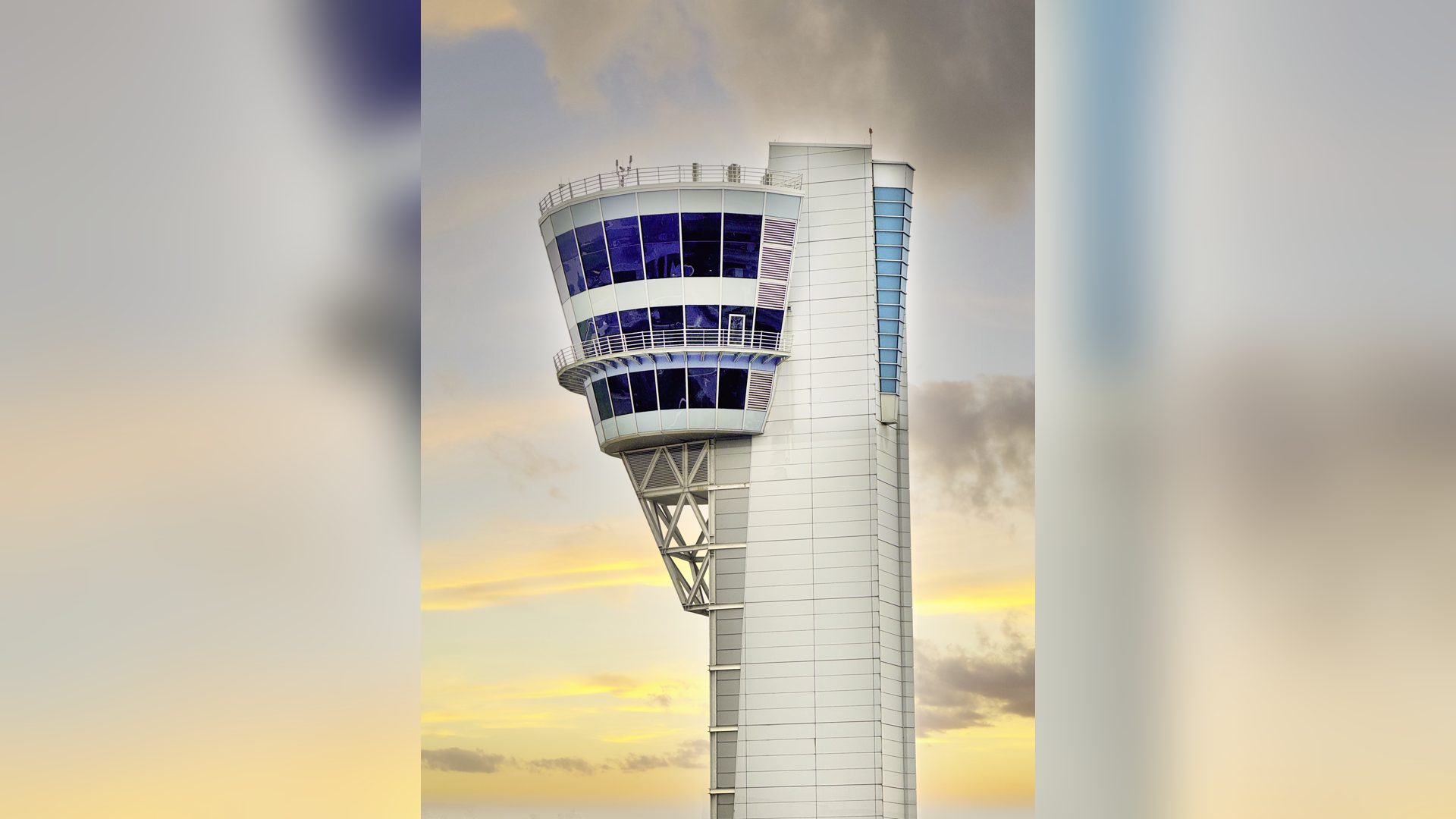
AP via Yahoo News (November 16, 2026), CNBC (November 14, 2026), Gizmodo (November 12, 2026), KPRC Click2Houston (November 13, 2026). *Photos: The FAA air traffic control tower at Philadelphia International Airport by Harrison Keely, CC BY 4.0, resized and placed on a blurred background; FAA Administrator Bryan Bedford by the Federal Aviation Administration, public domain, resized and placed on a blurred background.*