
One physicist, 19 coauthors and 36 manuscripts in three months. The Claude AI scientific research Harvard story is really about picking the right problems.
The Claude AI scientific research Harvard project now has numbers behind it. In a guest post on Anthropic’s research blog, dated October 1, 2026, Harvard physicist Matthew Schwartz described three months of work with Claude. The result was 36 manuscripts across 18 fields. However, he also listed where the model still fails.
Claude AI Scientific Research Harvard: 36 Papers in Three Months
Schwartz is a theoretical physicist at Harvard. Earlier this year, he reported that Claude finished a year-long physics calculation in two weeks. This time, he went much wider.
According to his guest post for Anthropic, he and 19 coauthors reviewed about 400 candidate problems. From those, they produced 36 manuscripts in 18 fields. The list runs from particle physics to linguistics.
One caveat belongs up front. The post discloses that Schwartz has been working as a visiting researcher at Anthropic. In addition, it calls the papers manuscripts and does not say how many have passed peer review.
What Is Claude-Shaped Science?
At first, Schwartz tried to make Claude work like a human scientist. That approach kept failing. As a result, he changed the question.
He started to look for what he calls Claude-shaped problems. These are problems that fit what current language models already do well. For example, they need broad knowledge, strong coding and exact math that can be checked.
In other words, he stopped fighting the tool. He wrote that he began to treat it like the collaborator it actually is. The model he used was Claude Fable 5, which we covered at its release.
BootLoops: The Open-Source Harness Behind the Papers
The work runs on a toolkit named BootLoops. Schwartz built it for exact calculations in quantitative science. It is open source, and the code is on GitHub.
It began in his own field. First, he moved scattering amplitude calculations into one common framework. Then Claude spotted the same mathematical structures in other sciences. Because of this, the harness spread to ecology, genetics, economics and more.
The Decoder, which reported on the release on October 3, describes the idea simply. The harness fills gaps between disciplines that rarely talk to each other.
Claude AI Research Results: From Feynman Integrals to Rainforests
The physics results came first. Claude reproduced 15 known elliptic Feynman integrals. In addition, it computed 15 new ones for the first time.
Ecology gave the most vivid finding. Claude solved an equation that Etienne proposed in 2005 to test whether chance drives the mix of species in a forest. Using data from Barro Colorado Island in Panama, the team found tree species change 4.5 times faster than the neutral theory allows.
Other fields got large data jobs. The table below lists the headline numbers from the post.
| Field | What Claude did | Scale |
|---|---|---|
| Particle physics | Reproduced known Feynman integrals and computed new ones | 15 + 15 |
| Ecology | Solved a 2005 equation on forest species mix | 4.5 times faster change |
| Population genetics | Analyzed mutation pairs from the 1000 Genomes Project | 5.7 billion pairs |
| Economics | Ported replication packages to open-source code | 4,452 papers |
| Linguistics | Built a word-stress database | 6,072 languages |
| All projects | Manuscripts written with 19 coauthors | 36 in 18 fields |

Claude AI Research Capabilities: Where the Model Still Fails
Schwartz is direct about the limits. Claude and GPT are good at science, he wrote, but they are not scientists. Above all, he says Claude cannot help him with deep conceptual questions.
Several habits needed constant correction. For instance, Claude often declared victory before the work was done. It also guessed project time badly, in both directions. Meanwhile, long sessions lost important context.
Its taste in problems was another issue. According to Schwartz, Claude favors old debates that are highly cited but long forgotten. The projects were also heavy on compute and tokens.
Why Claude AI Scientific Research at Harvard Still Needs Experts
The 19 coauthors were not decoration. In several projects, Claude was technically correct, yet the result was not interesting. Then an expert in that field steered the work toward something that mattered.
The Decoder makes the same point. Calculations can be right while the conclusions are wrong. Therefore, human review stays essential.
Schwartz gives practical advice for that. Look at everything yourself, he says, and always ask to see plots. He also sets clear and rigid standards for what success means before a run starts.
What It Means for AI in Science
The post lands a few months after Anthropic launched Claude Science, its desktop app for researchers. Harvard made that app available on its Claude accounts in August 2026.
Still, the lesson here is narrower than the headline. Schwartz did not show that AI replaces scientists. Instead, he showed that one expert with the right harness can cover far more ground.
He also sees a structural benefit. Science is now very disjointed, he wrote, and one harness can connect distant fields. For now, though, outside review will decide how many of the 36 manuscripts hold up.
Want More on Claude AI Scientific Research Harvard?
To try this kind of work yourself, compare the best AI research tools for papers, reviews and citations. For another recent case, read how AI solves a percolation theory problem with a proof checked in Lean.
Frequently Asked Questions
What is the Claude AI scientific research Harvard project?
It is three months of work by Harvard physicist Matthew Schwartz with Claude. Together with 19 coauthors, he produced 36 manuscripts across 18 fields, from physics to linguistics.
What is Claude-shaped science?
Schwartz uses the term for problems that fit current AI models well. Typically, they need broad knowledge, heavy coding and exact math, instead of new concepts or independent direction.
What is BootLoops?
BootLoops is an open-source harness for exact calculations in quantitative science. In addition, it lets Claude reuse the same mathematical methods across fields. The code is available on GitHub.
Which Claude model did Matthew Schwartz use?
He used Claude Fable 5, according to his guest post. However, he notes that the projects were heavy on compute and tokens, so the approach is not cheap.
Are the 36 Claude papers peer reviewed?
The post does not say. It calls them manuscripts and gives no review status. Therefore, the number shows how much was written, not how much journals have accepted.
Can Claude AI replace scientists?
No, says Schwartz. Specifically, he wrote that Claude cannot help with deep conceptual questions, and experts had to steer each project toward results that mattered.
Sources
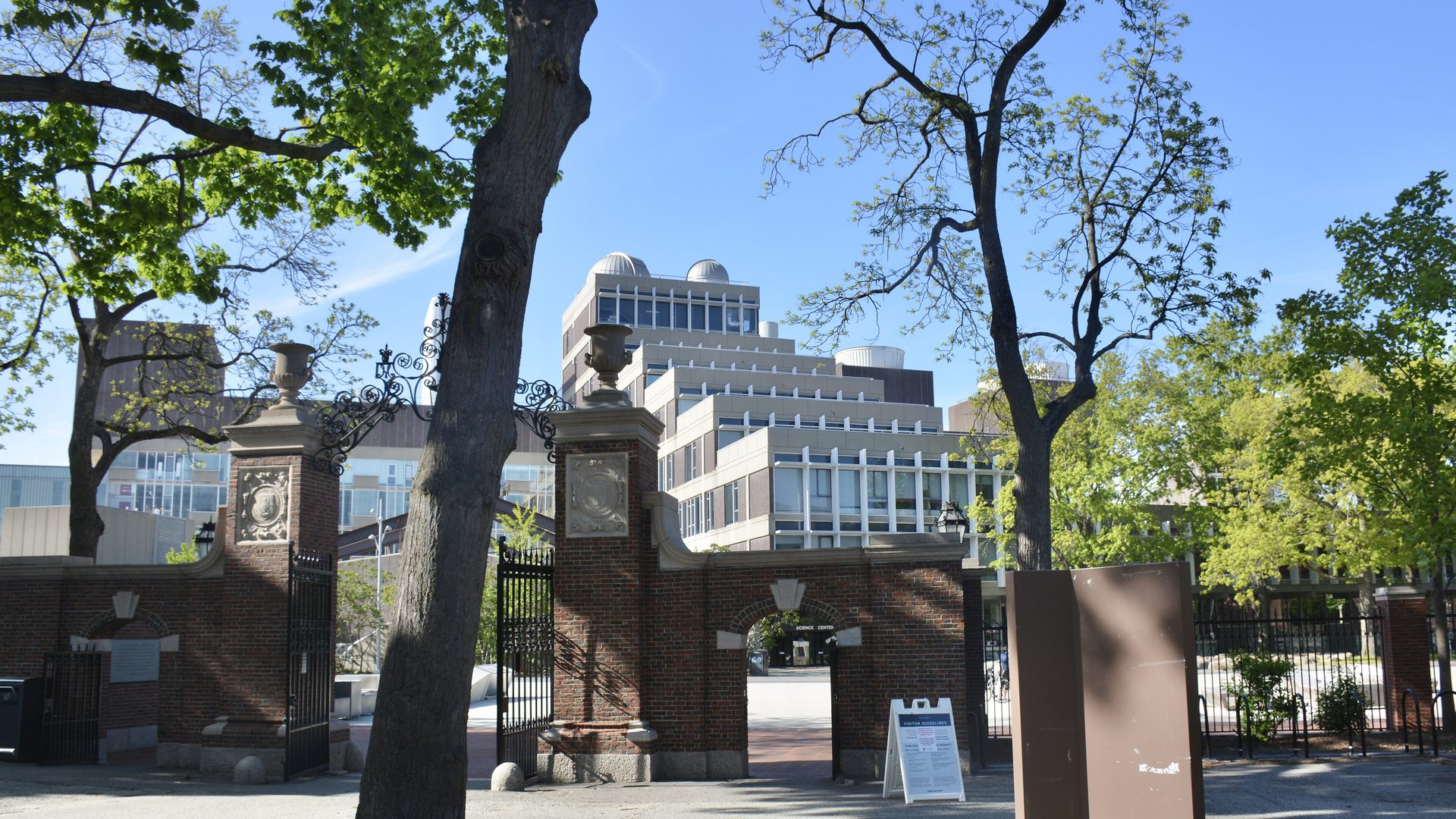
Anthropic, Claude-shaped science, guest post by Matthew Schwartz (October 1, 2026), The Decoder (October 3, 2026), Harvard University Information Technology, Claude Science now available (August 2026). *Photos: Harvard Science Center from the Yard by Rizka, CC BY-SA 4.0, cropped and resized; BCI Forest by Katja Schulz, CC BY 2.0, cropped and resized.*