He still draws by hand and does not own a mobile phone. Yet ChatGPT can produce his best-known monster in minutes. That is how the Axel Scheffler AI training dispute began.
The Axel Scheffler AI training dispute started with a simple test. Asked for a Gruffalo, ChatGPT returned images that closely resembled the illustrator’s work. Scheffler told Germany’s Die Zeit he is now thinking about going to court. However, reports describe a possible lawsuit and not a filed one, so nothing is decided yet.
Axel Scheffler AI Training Dispute: What He Actually Said
The comments came in a conversation with Die Zeit, picked up by German news agencies on 17 October. According to beck-aktuell, a German legal news service, the illustrator said: “I am considering suing.” All quotes here are our translations from German.
His reaction to the images was blunt. “I am appalled, this is quite clearly my character, only the backgrounds look completely different from how I draw them,” he said, as quoted by epd.
He also has a preference for how a case would work. “Most of all I would like to team up with other artists and go to court together,” he told the paper, according to the Tiroler Tageszeitung.
Has He Sued OpenAI? Not Yet
No. The agency reports all use the same careful wording, and none mentions a filing, a court or a case number. Instead, epd says he needs legal advice and is already talking to his publishers about possible support.
The target is not fully settled either. The epd report speaks of companies behind AI in general, while APA frames it around OpenAI. In addition, the reports do not say which legal claim he would bring.
So the search phrase is a little ahead of the facts. The Axel Scheffler AI training dispute is, for now, a public complaint with a threat of legal action attached.
Why This Is an AI Training Dispute at All
Strictly speaking, Scheffler complained about what comes out of the model. Training is about what went in. Those two questions tend to merge, though, because a tool can only recreate a character if something taught it what that character looks like.
The neighbouring lawsuits make that link directly. dpa notes that publishers, studios and authors have sued OpenAI and others, alleging their work was used without permission to train AI. Scheffler’s own words, meanwhile, point at a specific figure and not merely a drawing style.
That difference could matter. Copying a whole look is what people do with the Studio Ghibli AI art trend, whereas a named monster on demand is a narrower claim. Whether either one crosses a legal line is exactly what courts are now being asked to decide.
Axel Scheffler, Julia Donaldson and the Gruffalo
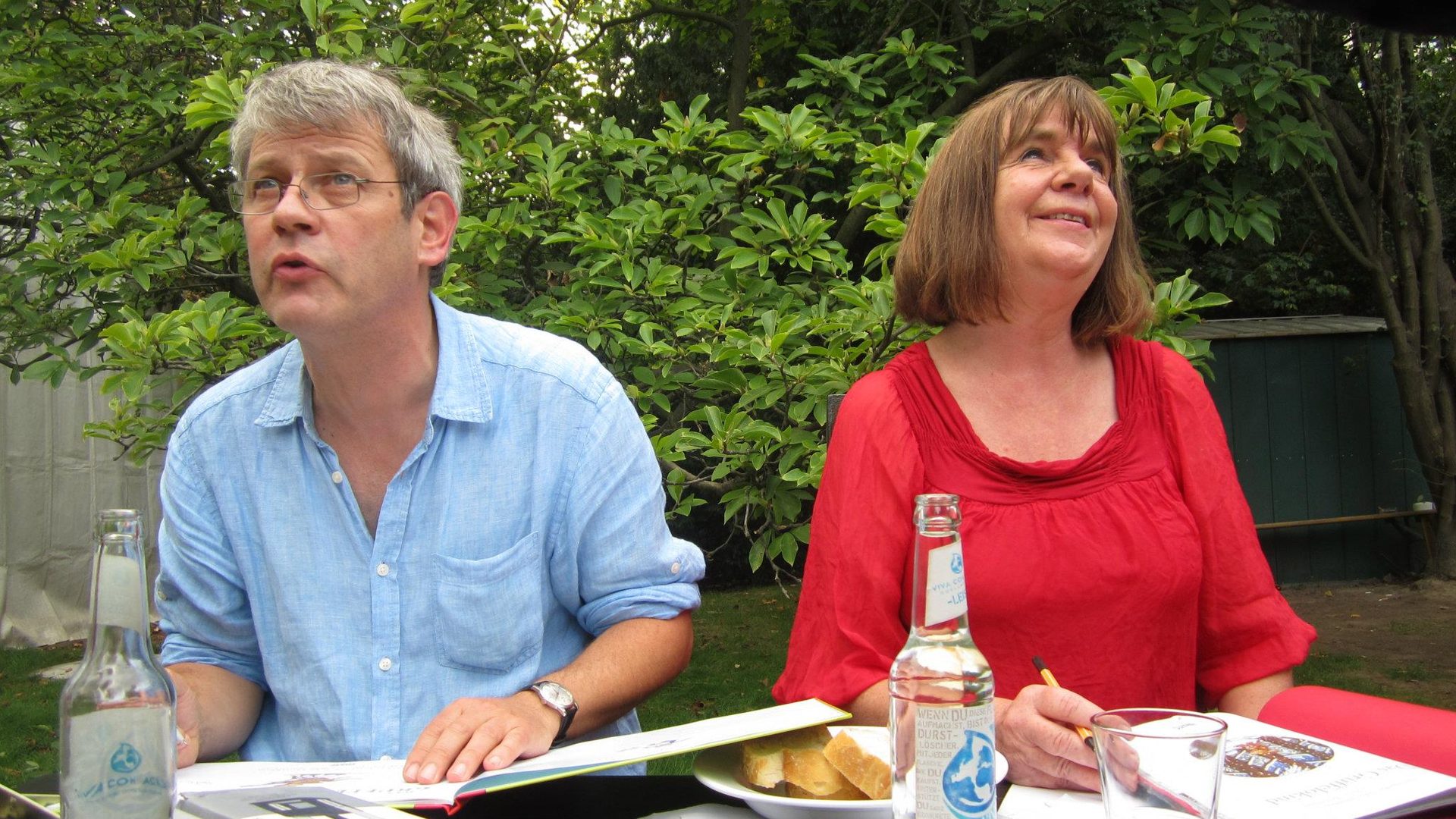
The stakes are personal as well as legal. Scheffler created The Gruffalo with British author Julia Donaldson, and the book became a bestseller in 1999. A sequel, The Gruffalo’s Child, followed in 2004. Their third story in the series was due in September 2026.
Asked about that book in 2025, he ruled out any machine help. “I have nothing to do with AI,” he told WEB.DE. He described working by hand with coloured pencils and watercolours on watercolour paper.
He also said then that fear among artists was “absolutely justified,” because illustrators already struggle to earn a living. Notably, the reports on his complaint name only Scheffler. We found no public comment from Donaldson.

The Children’s Book Lawsuits Against OpenAI
Scheffler would not be first. Children’s publishers in Germany have already gone to court, and both of the book cases sit at the same Munich court that ruled on song lyrics. The table below shows where each matter stands.
| Claimant | Work | Status |
|---|---|---|
| GEMA | Nine song lyrics | Won in November 2025, not final |
| Penguin Random House, Ingo Siegner | Der kleine Drache Kokosnuss | Filed 27 March 2026 |
| Carlsen, Marc-Uwe Kling, Astrid Henn | Das NEINhorn | Filed 19 August 2026 |
| Axel Scheffler | The Gruffalo | Considering action |
Penguin Random House sued OpenAI’s Irish company, the EU IP Helpdesk reported. It says ChatGPT produced text and illustrations “virtually indistinguishable” from the originals, then offered to help prepare them for print.
The Carlsen case goes further still. According to ActuaLitté, the claimants say ChatGPT generated book mock-ups with a cover, imprint page, publisher logo and a fake ISBN. These are allegations, and neither case has reached a verdict.
How the GEMA Ruling Shapes the Axel Scheffler AI Training Dispute
The most useful precedent so far involves music. On 11 November 2025, the Munich Regional Court sided with GEMA, the German music rights society, against OpenAI. According to HAERTING, a German law firm, the court found that training on the lyrics infringed members’ rights.
The court also treated memorisation as reproduction, because the lyrics were reproducibly fixed in the models. As a result, it rejected OpenAI’s reliance on the text and data mining exception. OpenAI has announced an appeal, so that judgment is not yet final.
Still, lyrics are not pictures. A ruling on nine songs does not automatically settle how the law treats a drawn character, and the Kokosnuss and NEINhorn cases should test that next. Any case over the Gruffalo would arrive with those questions still open.
What OpenAI Says, and What Happens Next
OpenAI has responded to the Penguin Random House claims, not to Scheffler directly. It says it is reviewing the allegations and respects the rights of authors and rights holders. It also says it is talking with many publishers about how they can benefit from AI.
In its reply to that lawsuit, epd reports, OpenAI argues that content is deliberately not reproduced one to one. Instead, the system recognises patterns and generates something new. That defence sits at the centre of all these cases.
There is another route, of course. In December 2025, Disney signed a licensing deal with OpenAI. For now, Scheffler’s next step is legal advice, and the first sign of real movement would be a filing.
Want More on the Axel Scheffler AI Training Dispute?
Curious how today’s image models actually differ? Our guide to the best AI image generators from text compares the main tools and what each one does well.
Frequently Asked Questions
What is the Axel Scheffler AI training dispute?
It is a conflict over ChatGPT images resembling the Gruffalo. Scheffler told Die Zeit he is considering legal action after seeing the results.
Has Axel Scheffler sued OpenAI?
Not according to the reports so far. He said he is considering it, needs legal advice and is talking to his publishers about support.
Which AI tool created the Gruffalo images?
Reports name ChatGPT from OpenAI. Asked for a Gruffalo, it produced images within minutes that showed clear similarities to his work.
Who else has taken OpenAI to court over children's books?
Penguin Random House sued with Ingo Siegner over Der kleine Drache Kokosnuss. Carlsen, Marc-Uwe Kling and Astrid Henn filed over Das NEINhorn.
What did the GEMA ruling decide?
In November 2025, a Munich court found OpenAI infringed rights in song lyrics through training and memorisation. That judgment is not final, since OpenAI has announced an appeal.
How has OpenAI responded to these claims?
In the Penguin Random House case, the company says it is reviewing the allegations. It also argues its system recognises patterns and does not copy content one to one.
Sources
beck-aktuell, dpa via Volksstimme, epd via Sonntagsblatt, Tiroler Tageszeitung, APA via VOL.AT, ActuaLitté, HAERTING, EU IP Helpdesk, WEB.DE. *Photos: Axel Scheffler und Julia Donaldson by Christoph Rieger, CC0, cropped and resized; The Gruffalo by Craig Wallace, CC BY-SA 2.0, resized and placed on a blurred background.*