
Disclosure: this article contains affiliate links. If you buy through them, we may earn a commission at no extra cost to you. It never decides our picks. Affiliate Disclosure · How we use AI
A $399 QLED with flagship software — our Samsung Q7F review tests how much TV that really buys.
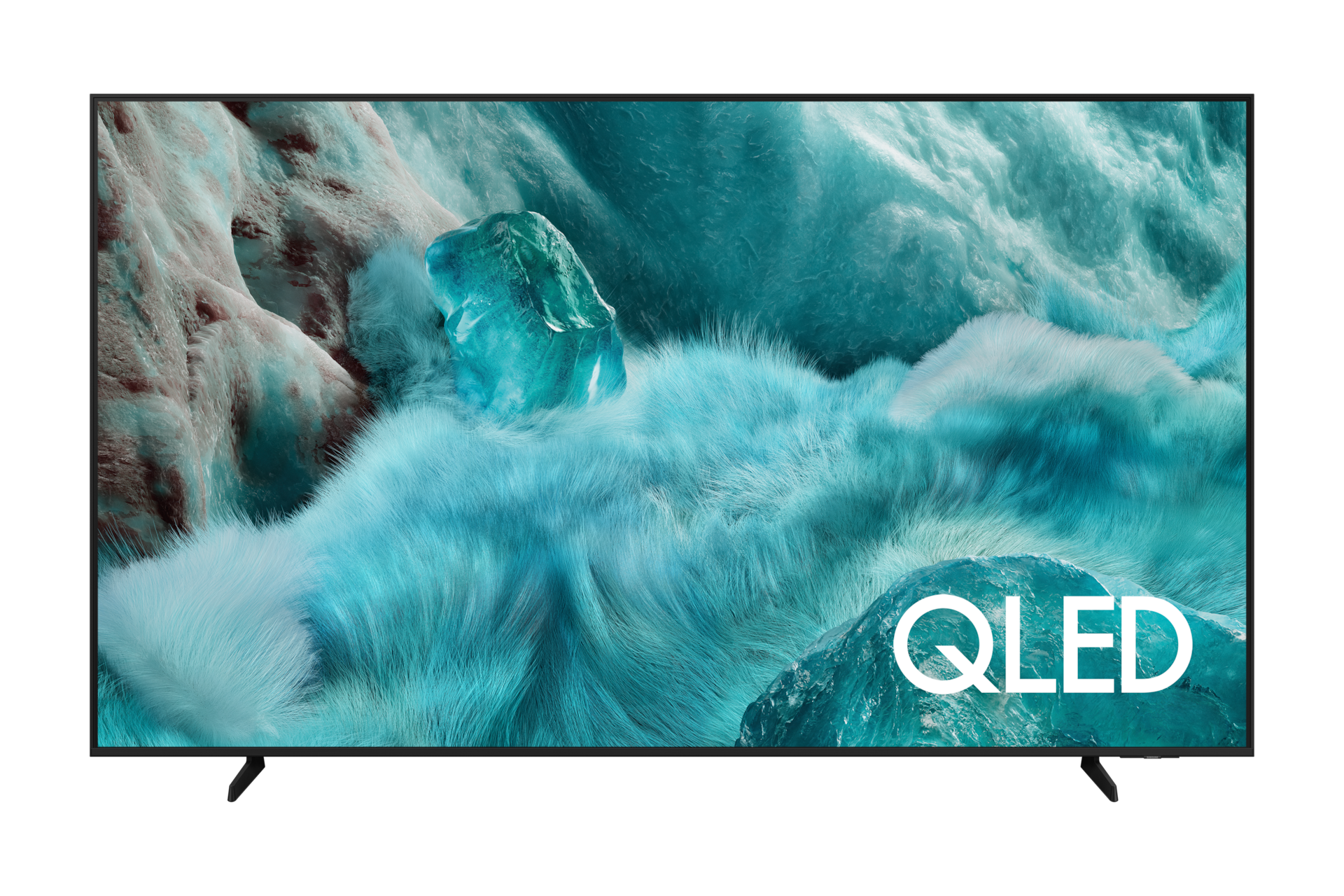
What Is the Samsung QLED Q7F?
This Samsung Q7F review breaks down the Samsung Q7F, which is the most affordable mainstream model in Samsung’s 2025 QLED lineup, slotting between the Q6F and Q8F. It brings quantum-dot color, the Q4 AI processor with 4K AI upscaling and Samsung’s Vision AI software down to a starting price of just $399.
Sizes stretch remarkably wide — 43 to 98 inches — making it Samsung’s budget answer for everything from a bedroom to a big family wall. Owners rate it 4.7 out of 5 across thousands of reviews.
This Samsung Q7F review lays out exactly what you get for the money — and the three trade-offs that define it.
Samsung Q7F Price and Where to Buy
Pricing is the headline: $399 (43-inch), $449 (50-inch), $529 (55-inch), $629 (65-inch) and $999 (75-inch), with a 98-inch for giant rooms. Those are launch numbers; promotions push them lower.
At $629 for a 65-inch QLED with Samsung’s full 2025 software, the value proposition is obvious — provided the trade-offs below fit your viewing.
Picture Quality: QLED Color on a Budget Backlight
Quantum dots earn their keep here. Colors are richer and more saturated than typical budget LCDs, and after a little tuning they look genuinely good — the main reason the Samsung Q7F feels a class above no-name sets.
The honest limits: measured peak brightness sits roughly in the 250–400-nit range depending on mode and size, and there is no local dimming — the backlight cannot brighten highlights or deepen shadows independently. HDR is therefore restrained: supported (HDR10+, HDR10, HLG), but without the punch the format promises. In a moderately lit room with everyday content, none of this ruins the show; in a dark room with HDR films, it shows.
The Q4 AI Processor: Budget TV, Real Upscaling
The Q4 AI processor is the Q7F’s quiet hero. Its 4K AI upscaling visibly cleans up HD cable, older shows and streaming — reviewers confirm it works as advertised — which matters more on a budget set than anywhere else, since so much budget-TV viewing is sub-4K.
Vision AI features ride along too: AI picture and sound optimization plus the Tizen/One UI smart experience, Samsung Knox security and Alexa support. Software is indistinguishable from far pricier Samsungs.
Gaming: Casual Yes, Competitive No
Clarity time: the Q7F has a 60Hz panel with HDMI 2.0 ports. There is no 4K/120Hz, no VRR, no FreeSync. Input lag in Game Mode is low, so casual console play — sports titles, family games, kids on the Switch — feels perfectly fine.
Competitive players and PS5/Series X owners chasing 120fps should step up to the Q8F (55-inch+) or a Neo QLED. Knowing this before purchase is the whole game.
Sound, Tizen and Everyday Use
The 20W two-channel audio is what you would expect: clear dialogue, limited body, Q-Symphony if you add a Samsung soundbar later. Tizen is quick and complete, with every major app and 2,700+ free Samsung TV Plus channels — arguably the best smart platform ever fitted to a $399 TV.
Owners consistently praise the easy setup and intuitive interface, which tracks with that 4.7-star average.
What You Give Up at $399 — and What You Don’t
You give up: brightness headroom, local dimming, 120Hz gaming and Dolby Vision. You keep: real quantum-dot color, genuinely useful AI upscaling, flagship-grade software with Vision AI, Knox security and a size for every room.
That trade reads fair at this price — which is why SamMobile called it a no-brainer at $399. For the next tier of picture quality, our LG C5 review shows what OLED money buys.
Real-World Viewing: Knowing Its Job
The Q7F succeeds because it knows exactly what it is. In a bedroom or a moderately lit living room, everyday content — streaming series, cable, YouTube, daytime sports — looks colorful and clean, several classes above what $399–$629 bought even three years ago. The upscaler quietly carries old sitcoms and HD channels.
Push it into home-cinema duty and the budget shows: HDR films glow politely instead of dazzling, dark scenes flatten, and fast camera pans can shimmer. The honest move is not to ask. As the household’s second screen, a kid’s room upgrade or the everything-TV in a casual room, it over-delivers.
That gap between expectation and price is why owner ratings sit at 4.7 stars — people get more than they paid for, and it shows in the reviews.
Getting the Best From the Q7F
Three settings transform it: switch to Movie mode for films (Standard is cold), nudge color saturation down a notch if skin tones run hot, and disable the strongest motion smoothing. After that, the QLED panel settles into a genuinely pleasing balance.
Claim the free Samsung TV Plus channels during setup, sign apps in via the SmartThings phone app to skip remote-typing, and if the 20W speakers wear thin, even an entry soundbar via Q-Symphony lifts the experience disproportionately. Total setup: ten painless minutes.
Samsung Q7F Specs at a Glance
The essentials:
- Panel: 4K QLED (quantum dot), edge-lit, no local dimming
- Processor: Q4 AI (Gen1) with 4K AI upscaling
- Brightness: ~250–400 nits depending on mode/size
- HDR: HDR10+, HDR10, HLG (no Dolby Vision)
- Gaming: 60Hz, HDMI 2.0, low input lag in Game Mode (no VRR)
- Audio: 20W 2.0ch, Q-Symphony support
- Platform: Tizen/One UI, Vision AI, Samsung Knox, Alexa, TV Plus
- Sizes: 43, 50, 55, 65, 75, 85, 98 inches
How Samsung QLED Q7F Compares
Pros and Cons
What we liked
- Outstanding value — QLED color from $399
- Q4 AI upscaling genuinely improves HD content
- Flagship-grade Tizen + Vision AI software
- 4.7/5 average owner rating
- Huge size range, 43 to 98 inches
- Samsung Knox security and free TV Plus channels
What could be better
- 60Hz panel, no VRR or HDMI 2.1
- No local dimming — restrained HDR
- Modest peak brightness (~250–400 nits)
- Thin 20W audio
- No Dolby Vision
Who Should Buy the Samsung Q7F?
Value hunters, bedrooms, second TVs and family rooms with some ambient light: if the diet is streaming, cable, sports and casual console play, the Q7F delivers a polished, colorful experience for remarkably little money. The 98-inch even makes budget home cinema a thing.
Skip it if you need 120Hz gaming, punchy HDR movie nights or true blacks — that is Q8F, Neo QLED or OLED territory.
Final Verdict: Is the Samsung Q7F Worth It?
Judged by its price, the Samsung Q7F is one of 2025’s easiest recommendations: real QLED color, working AI upscaling and Samsung’s best software, with limits that are predictable rather than surprising. It is not a cinema machine — it is an enormous amount of everyday TV for $399–$999.
Want More After This Samsung Q7F Review?
See how it compares to the rest of our best AI smart TVs picks, or step up a class with the LG C5 review.
Frequently Asked Questions
Is the Samsung Q7F worth it?
For budget buyers, yes — quantum-dot color, effective 4K AI upscaling and Samsung’s full smart platform from $399 make it a standout value. Just accept the 60Hz panel and restrained HDR.
Is the Samsung Q7F good for gaming?
For casual play, yes: input lag in Game Mode is low. But the 60Hz panel and HDMI 2.0 ports mean no 4K/120Hz and no VRR — competitive and next-gen-focused gamers should look at the Q8F (55-inch and up) or a Neo QLED.
How bright is the Samsung Q7F?
Roughly 250–400 nits depending on size and picture mode — fine for moderately lit rooms, modest for HDR movies, and without local dimming highlights cannot pop independently.
Does the Samsung Q7F support Dolby Vision?
No — HDR10+, HDR10 and HLG only, consistent with all Samsung TVs.
Samsung Q7F vs Q8F — what is the difference?
The Q8F is brighter (~458–500 nits), and its 55-inch-plus sizes add 4K 120Hz with VRR over HDMI 2.1. The Q7F costs notably less and comes in more sizes; its 60Hz panel is the main sacrifice.
What sizes does the Samsung Q7F come in?
43, 50, 55, 65, 75, 85 and a giant 98 inches.
Does the Samsung Q7F have Vision AI?
Yes — AI-optimized picture and sound plus Samsung’s Tizen/One UI experience, Knox security and Alexa support, the same software family as far pricier models.