
Disclosure: this article contains affiliate links. If you buy through them, we may earn a commission at no extra cost to you. It never decides our picks. Affiliate Disclosure · How we use AI
Every local-AI conversation ends the same way: “…unless you run RTX 5090 for AI.” Here’s what that asterisk buys.
What Is the RTX 5090 — and Why AI Builders Care
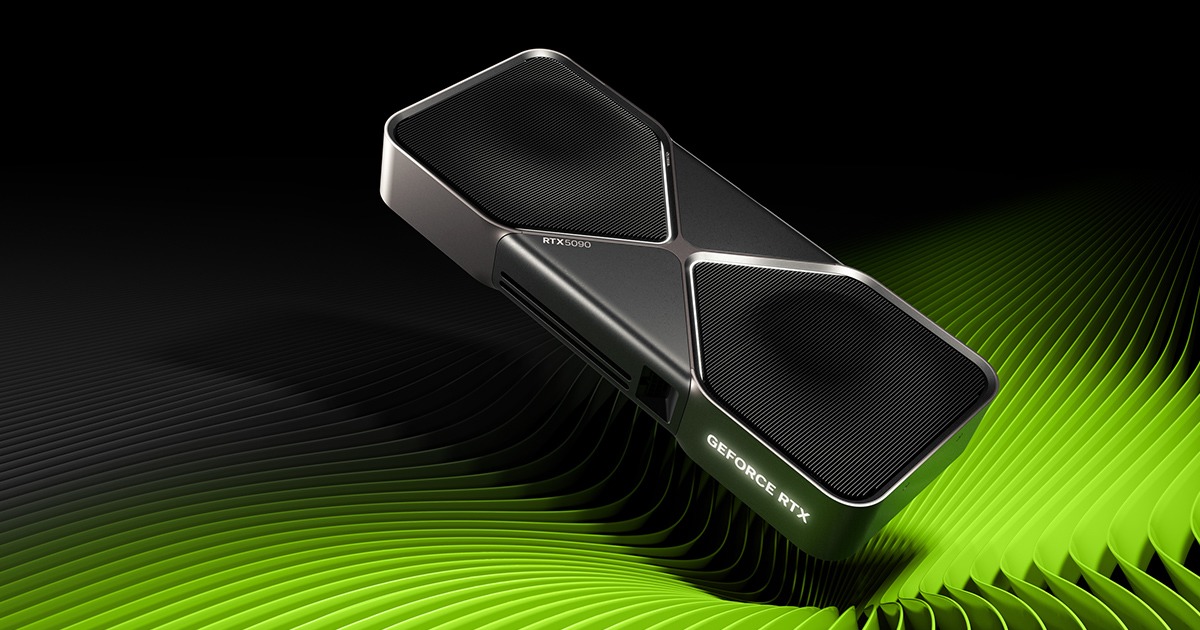
This RTX 5090 for AI covers the NVIDIA GeForce RTX 5090. The NVIDIA GeForce RTX 5090 ($1,999 MSRP) is the Blackwell flagship and the ceiling of consumer AI hardware: 32GB of GDDR7 on a 512-bit bus delivering 1,792 GB/s of bandwidth, with 21,760 CUDA cores behind it.
For gamers those numbers mean frames. For AI builders they mean something more concrete: which models fit in memory, and how fast the tokens flow once they do. On both counts, nothing else on a desk comes close.
VRAM: What 32GB Actually Unlocks
The rule of local AI is brutal: a model that does not fit in VRAM barely runs at all. With 32GB the 5090 comfortably hosts 70B-class models in quantized form, mid-size models at higher precision, and long context windows that 24GB cards have to truncate.
Consequently, an entire tier of work — serious quantized Llama-70B chat, large-context document analysis, bigger LoRA fine-tunes — moves from ‘cloud only’ to ‘on my desk’. That is the 5090’s real product: capability, not speed.
Bandwidth: Where the Speed Comes From
Token generation in LLMs scales almost linearly with memory bandwidth, and the 5090’s 1,792 GB/s is 78% more than the RTX 4090’s 1,008 GB/s. In practice that gap is exactly what you feel in tokens per second.
Image and video models benefit just as directly — Stable Diffusion, SDXL, Flux and the new wave of local video generators all run fastest here among consumer cards. Furthermore, the full CUDA ecosystem means every tool works on day one: Ollama, llama.cpp, vLLM, ComfyUI, PyTorch.
Power, Price and the Practical Catches
Two real costs beyond the sticker. First, 575W of board power demands a serious PSU (1,000W+ recommended) and case airflow to match. Second, the DRAM shortage keeps street prices above the $1,999 MSRP — patience or alerts pay off.
Still, against a $1,299 32GB rival (AMD’s R9700) the 5090 charges a $700 premium largely for bandwidth and CUDA — a premium that, for daily heavy use, most builders end up considering money well spent.
How NVIDIA GeForce RTX 5090 Compares

Pros and Cons
What we liked
- 32GB runs 70B-class quantized models and long contexts
- 1,792 GB/s bandwidth — tokens scale with it almost linearly
- Fastest consumer card for Stable Diffusion and video models
- Full CUDA support: every AI tool works day one
What could be better
- 575W draw demands PSU and cooling planning
- Street prices sit above the $1,999 MSRP amid DRAM shortage
- Overkill if your models fit in 16GB
Who Should Buy the RTX 5090 for AI?
Daily local-AI practitioners: builders running large quantized LLMs, fine-tuning, or generating images and video for real work. If your workload lives under 16GB, the RTX 5070 Ti delivers most of the experience for a third of the price.
Our Verdict on the RTX 5090 for AI
The RTX 5090 is the rare flagship whose price-to-capability story holds up: it does things no other consumer card can, and does everything else faster. The endgame pick of our best GPU for AI guide — buy it once, stop thinking about VRAM for years.
Frequently Asked Questions
Is the RTX 5090 good for AI?
It is the best consumer GPU for AI, period: 32GB of GDDR7 and 1,792 GB/s of bandwidth run larger models faster than anything else you can put in a desktop.
What size LLM can an RTX 5090 run?
Quantized 70B-class models fit comfortably in its 32GB, along with long context windows; smaller models run at higher precision or blazing speed.
How much power does the RTX 5090 need?
Board power is 575W — plan a 1,000W+ PSU and good case airflow.
Is the RTX 5090 worth it over the RTX 4090 for AI?
For AI, yes: 32GB vs 24GB fits bigger models, and 1,792 vs 1,008 GB/s of bandwidth translates almost directly into faster token generation.
Why is the RTX 5090 above MSRP?
An industry-wide DRAM shortage has kept street prices above the $1,999 MSRP; availability improves in waves, so price alerts help.
RTX 5090 or AMD R9700 for local AI?
Both have 32GB. The 5090 buys much higher bandwidth and the frictionless CUDA ecosystem for $700 more; the R9700 is the value play if you are comfortable with ROCm.
Want More Than This RTX 5090 for AI?
Choosing between cards? Our full best GPU for AI guide ranks every GPU here by VRAM, bandwidth and price. On a tighter budget, our used RTX 3090 review covers the value alternative. For everything else we have reviewed, browse all our AI hardware reviews.