Shrimp shaped like life preservers, a burrito nobody wants to bite, and a dish that does not exist. Welcome to AI slop in restaurant menus.
AI slop in restaurant menus has moved from a social media joke to a real business problem. Cafés, delis and burger chains are swapping food photography for cheap generated images. Diners keep posting the results, and on September 25 CBC News reported that the trend is now dominating menus across Canada too.
What Is AI Slop in Restaurant Menus?
“AI slop” is internet shorthand for cheap, low-effort content made by generative AI. On a menu, it means food pictures that no camera ever took. The sandwiches shine like plastic. The shrimp come out as perfect rings, and the cheese melts in suspiciously even sheets.
TikTokers started calling them “AI slop menus”, and the name stuck. According to CNN’s reporting on the viral photos, the label signals everything diners do not want near their lunch: low quality, laziness and, well, slop.
The AI slop meaning is broader than food, of course. Still, food is where it lands hardest, because a menu photo is a promise about what arrives on the plate.
AI Food Slop Goes Viral on Social Media
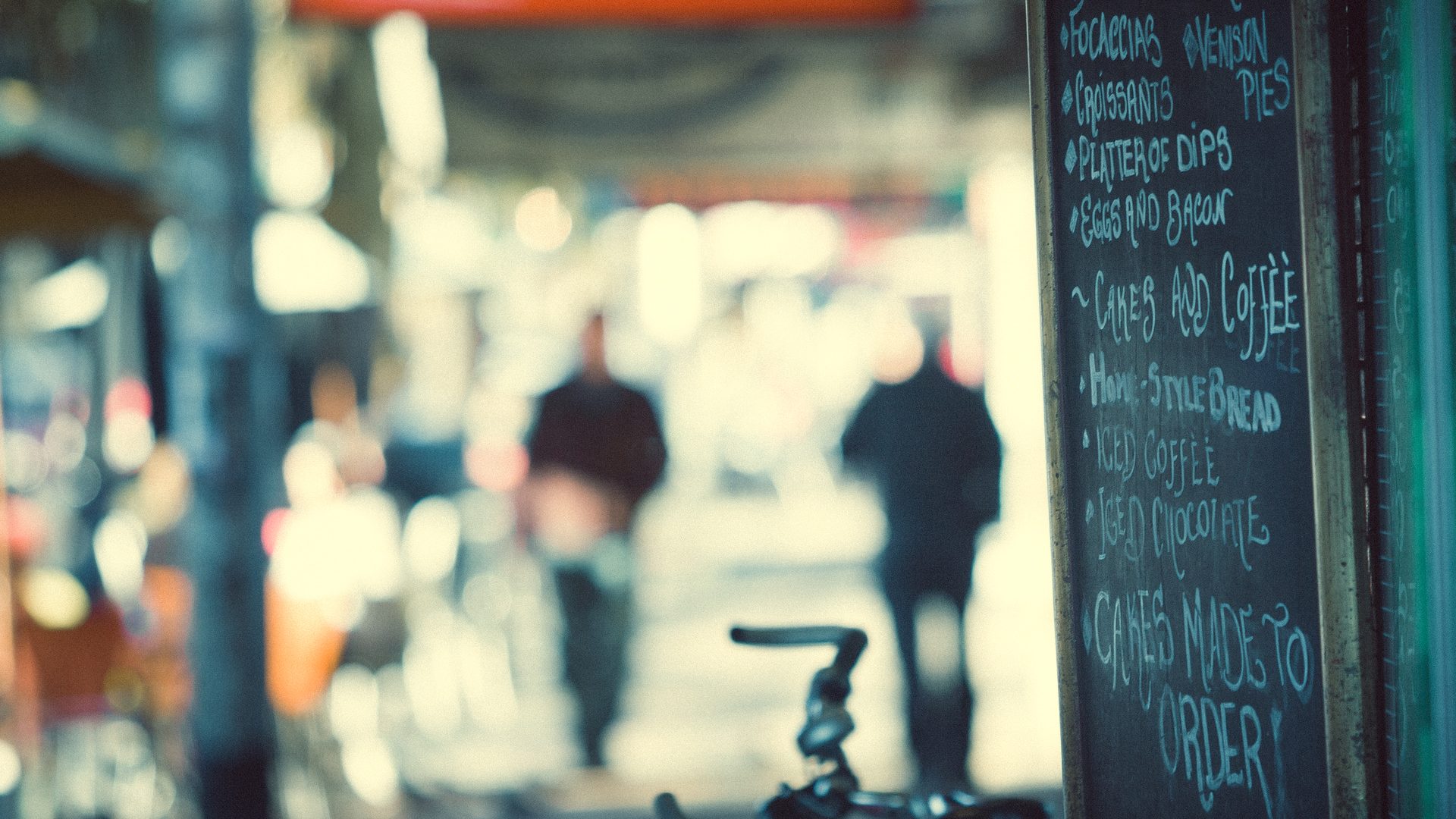
The AI food slop wave has a clear starting shape. Someone walks past a sandwich board, snaps it and posts it with a caption. Then thousands of people zoom in on the details.
Fortune described croissants with impossibly perfect layers and an affogato full of random holes. Other posts showed a shrimp scampi whose shrimp look like miniature life preservers. One X user even tried to order a dish from a café’s outdoor menu, only to learn ChatGPT had invented it.
Moreover, the problem is global. CNN found the same images in Hollywood, Tokyo, Kuala Lumpur and Berlin, where a tour guide’s photo of one menu went viral.

AI Slop in Restaurant Menus: The Named Cases
These are the cases reporters have named so far, from New York to Wyoming.
| Business | Where | What happened |
|---|---|---|
| Delis and cafés | New York City | Maggie Moda posted their AI sidewalk signs on X and the post passed 2.8 million views |
| Grind & Unwind | Haight Street, San Francisco | A Reddit thread titled “Yum, slop” drew 670+ upvotes; the owners say the images were temporary |
| San Francisco coffee shop | San Francisco | Paid hundreds of dollars to remove graffiti aimed at its AI food images, per SFGate via NBC |
| Chi-Town Deli | Chicago | Used AI sandwich images while it waited for a new sign with real photos |
| Chugwater Soda Fountain | Wyoming | Co-owner Jill Winger posted a handwritten no-AI pledge that collected 119,000 likes |
| The Fancy Induced Burger | Canada | Shoots food on phones, then polishes the photos with ChatGPT before they go out |
Most of these are small, often family-run places. For example, the Lozanos opened Grind & Unwind in May while raising three children under five. The AI window menu was meant as a stopgap, and the internet treated it as a verdict.
Why Restaurants Turn to an AI Menu Generator
The short answer is money. According to CNN, 42% of restaurant operators told the National Restaurant Association they failed to turn a profit in 2025. In Canada, 41% of Restaurants Canada members reported running at a loss or breaking even.
Against those margins, an AI menu generator looks like free marketing. A professional shoot needs a photographer, a stylist and a day of kitchen time. A prompt takes seconds. CNN also cited figures showing that 26% of restaurant owners already use AI, mostly for marketing.
Speed matters as well. Fez Mian, marketing manager at The Fancy Induced Burger, told CBC that the chain’s AI-polished photos go out “within five minutes, 10 minutes”. Importantly, a human still checks that the model has not added ingredients the burger does not have.
Customer Complaints About AI Menu Images
Customer complaints about AI menu images are remarkably consistent. The first is trust. “I feel like it’s really inauthentic and it doesn’t make me wanna go eat at your restaurant,” Toronto diner Cynthia Lem told CBC.
The second is plain disgust. Los Angeles ad sales worker Adaeze Onejeme told CNN that one set of nuggets did not even look like chicken. Food & Wine features editor Kat Kinsman wrote that the pictures were ruining her appetite.
Some customers go further. In San Francisco, a coffee shop paid hundreds of dollars to scrub graffiti that appeared to target its AI facade. Meanwhile, the Reddit crowd compared its focaccia to a loofah.
Why AI Food Slop Looks So Wrong
Science has a name for that queasy feeling. Psychologist Alexander Diel at Germany’s University of Duisburg-Essen studies how people react to AI food photos. In a 2025 peer-reviewed study, his team found that slightly imperfect AI food images felt more uncanny than both cartoonish and fully realistic ones.
A newer study from the same group, published in a Nature journal, went further. People rated real and generated dishes the same for calories and health. Yet they wanted to eat the AI food less.
Diel ties it to survival. “We are very sensitive to when something is even slightly off,” he told CNN, because food can make us sick. In other words, the uncanny valley that roboticist Masahiro Mori described in 1970 now runs through the lunch counter.
Is AI Slop in Restaurant Menus Misleading Advertising?
Food ads have always been styled, so an AI image is not automatically illegal. Harvard Law professor Rebecca Tushnet told Fortune the test is whether a reasonable consumer would read the picture as a real claim about the food. If so, it “could be deceptive.”
Rotman School of Management professor David Soberman gave CBC a concrete line. Enhancing a photo is fine, but making a steak look far thicker than the one you serve crosses into misleading territory. Libby O’Neill of Loeb & Loeb summed it up for Fortune: “Sell the product you depict, and depict the product you sell.”
What Restaurants Can Do Instead
Experts are not telling owners to hire an agency. Marketing professor David Pullara told CBC the problem is not AI itself, but skipping “a common-sense filter” before printing. Tastefully enhanced photos of real food, he added, can still save small businesses money.
Toronto food stylist Zoe Rousseau, who has worked with Shake Shack and Boston Pizza, was blunter. “I think that restaurateurs are better off taking pictures with their iPhone,” she said. Similarly, Nancy Hopkins of the International Association of Culinary Professionals told CNN that real people and real stories will always win.
If you do generate images, pick tools built for realism, like the ones in our guide to the best AI image generator from text, and use them for backgrounds or promos. Then photograph the actual dish, because that is the picture customers judge.
Want More on AI Slop in Restaurant Menus?
For the other side of the restaurant AI story, see how one seafood chain went all in with Red Lobster AI. And for another week when a generated image met an angry neighborhood, read about the Bristol AI mural.
Frequently Asked Questions
What is AI slop in restaurant menus?
It is the wave of cheap AI-generated food images on menus, sidewalk signs and delivery listings. Diners spot them by their plastic shine, oddly perfect shapes and dishes that look nothing like the real food.
What does AI slop mean?
Slop is slang for low-effort content churned out by generative AI. People use the word for spammy posts, fake videos and, lately, food pictures, because the output looks mass-produced and careless.
Why do restaurants use AI menu images?
Mostly to save money and time. Many operators run on thin margins, and a prompt costs far less than a photographer and stylist. Some owners also say the images were only a temporary fix.
Is it legal to use AI food photos on a menu?
Generally yes, as long as the picture does not mislead. Legal experts told Fortune and CBC that trouble starts when an image changes the size, ingredients or quality a reasonable customer expects.
How can you tell if a menu photo is AI generated?
Look for glossy textures, repeated patterns, perfectly round shrimp and melted cheese that is too even. In addition, check lettering and plates, which models often warp. Still, over 60% of people in a 2023 Slerp survey could not tell.
What are the most common customer complaints about AI menu images?
Diners mainly say the pictures feel dishonest and unappetizing. Several also worry the real dish will not match the photo, and one X user found the advertised item did not exist at all.