
Ten thousand AI agents, 88 hours, and a question that stood for 90 years: the OpenAI Navier Stokes claim has mathematicians cheering and arguing at once.
On September 8, 2026, OpenAI said an internal system had resolved the Navier-Stokes existence and smoothness problem, one of the seven Millennium Prize Problems. The OpenAI Navier Stokes announcement came with a written proof and a machine-checkable Lean formalization. It also came with a fight over who got there first, and whether the problem is really finished.
What the OpenAI Navier Stokes Proof Actually Shows
The claim is narrower than the headlines suggest, and more interesting for it. OpenAI says its system proved that a fluid which starts perfectly smooth and at rest can still break down in a finite amount of time. A smooth force acts on the fluid, and its energy stays finite the whole way.
Mathematicians call that breakdown a singularity. It means the speed inside the fluid grows without bound, which no real fluid can do. In the official Clay formulation, the result establishes statement “C” and also “D”. In plain terms, OpenAI is not saying fluids always behave. It is saying they can misbehave.
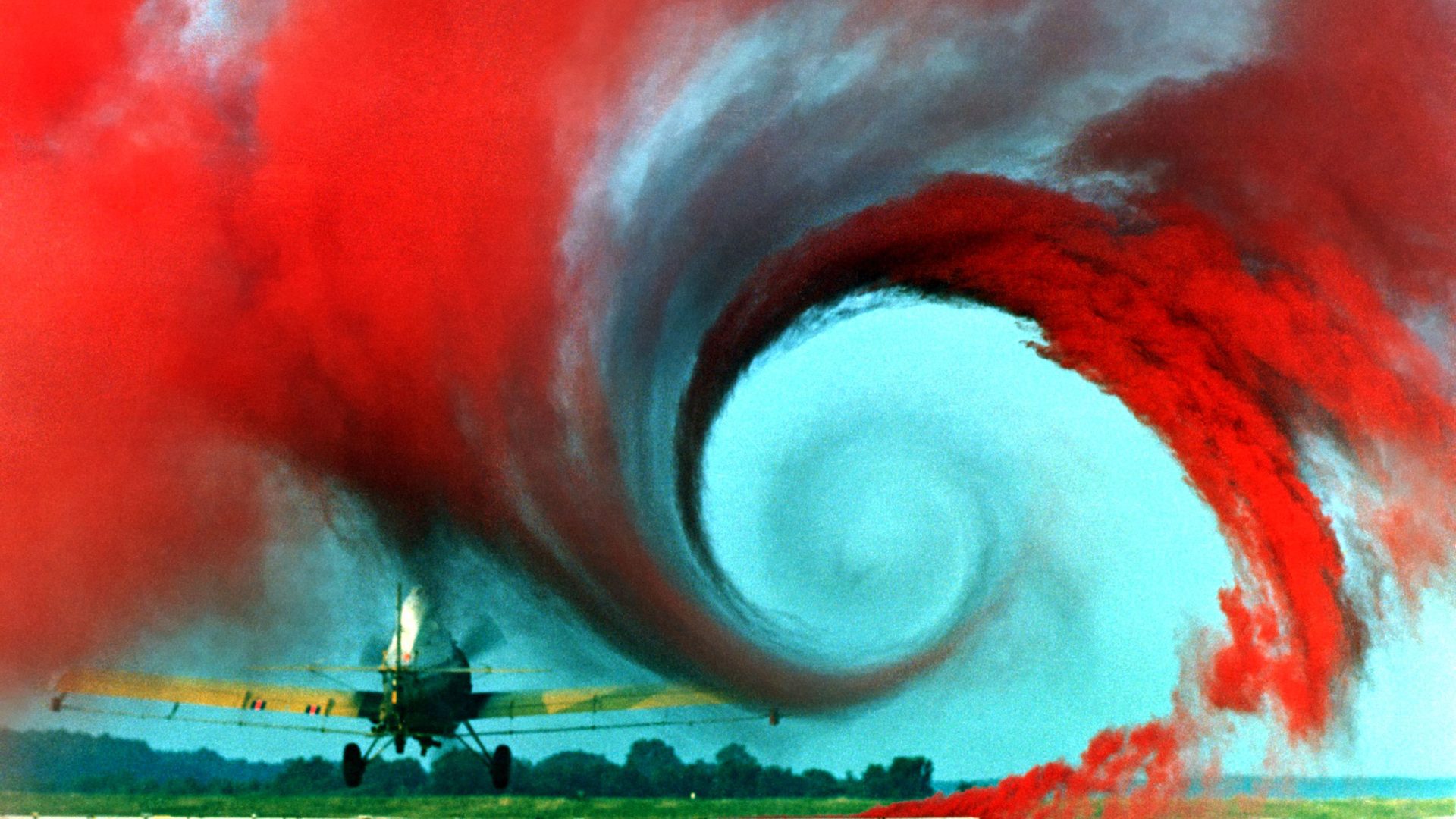
The shape of the answer is a vortex. According to OpenAI’s own writeup, the swirl spirals inward and stretches out like spaghetti, shrinking and speeding up while its energy stays finite. Crucially, the blowup has to come from the fluid’s own motion, not from someone shoving infinite force into it by hand.
The Navier Stokes Problem, Explained Without the Maths
The Navier-Stokes equations apply Newton’s second law, F=ma, to moving fluids. They treat a fluid as a smooth continuous substance rather than a crowd of individual molecules. That simplification is what makes them useful, and it is also where the trouble hides.
They date to the nineteenth-century work of Claude-Louis Navier and George Gabriel Stokes. In 1934, Jean Leray showed that solutions exist in a looser, generalized sense. However, nobody could show those solutions always stay smooth. The Clay Mathematics Institute made that gap official in 2000, naming it one of seven Millennium Prize Problems.
So the navier stokes problem is not academic trivia. Engineers use these equations for aircraft design, weather forecasting and the study of blood flow. If the maths can break down, it matters where and when.

How 10,000 Agents Ran the OpenAI Navier Stokes Effort
The method is as striking as the result. OpenAI has been training a new internal model since August 28, one it describes as significantly more capable than GPT-6 Astra. That model is not public, and its training is still running.
Rather than one model thinking hard, OpenAI ran a swarm. It split the agents into groups that could talk among themselves, with tools for running code and reading a cached copy of the internet. The group that cracked Navier-Stokes ran roughly 10,000 agents at once.
Different groups got different versions of the problem on purpose. Some chased variants that would produce a proof, others chased variants that would produce a disproof. Meanwhile, Codex pooled the best ideas from each group and fed them back in.
The numbers are blunt. For Navier-Stokes alone the agents exchanged 2.7 million messages and burned about 130 billion output tokens. Across every problem attempted, that rose to 4.9 million messages and roughly 300 billion tokens. OpenAI researcher Sebastien Bubeck put the bill in the millions of dollars.
The OpenAI Navier Stokes Timeline, Hour by Hour
OpenAI dated every step of the run, so the sequence is unusually easy to follow. Here is how eleven days turned a rumour into a published proof and a public argument.
| Date (2026) | What happened | Hours since agents launched |
|---|---|---|
| Aug 28 | OpenAI begins training the new internal model | n/a |
| Sep 1 | Agents launched at the open Millennium problems after a rumour | 0 |
| Sep 5 | Agents reach the Navier-Stokes resolution | 88 |
| Sep 6 | Lean formalization and verification finish | 105 |
| Sep 7 | Alpoge and Buckmaster publish their forced Euler result | n/a |
| Sep 8 | OpenAI publishes the proof writeup and the Lean file | n/a |
The Euler Detour That Made It Possible
One step deserves its own note. Alongside the main problem, OpenAI handed the agents a set of easier warmups, including the same blowup question for the Euler equations, which drop viscosity entirely. Nearly 100 agents solved the unforced version in about 50 hours. That success is what convinced the team to move its resources onto Navier-Stokes.
Navier Stokes Controversy: Anthropic, NYU and the Credit Fight
The rumour that started everything was real. It traced back to Levent Alpoge, an Anthropic employee, and Tristan Buckmaster, a maths professor at NYU, who had been using AI models on the same family of questions. They published on September 7, one day before OpenAI.
Their result is not the same result, though. Alpoge and Buckmaster resolved the forced Euler problem, while OpenAI targeted Navier-Stokes itself. OpenAI says it reached out on September 6 to offer a joint announcement, recognises their priority on forced Euler, and notes that the two proofs differ substantially.
Buckmaster is not satisfied. He has questioned whether OpenAI pursued a direction drawn from his unpublished work, and says he asked whether the model had been trained on their Codex sessions without getting an answer. He has also alleged that Bubeck pressured him in private, a characterisation OpenAI disputes.
For its part, OpenAI states that neither its researchers nor its agents saw the pair’s work before it went public, and that it touched no specific user data. It adds one careful caveat: it cannot rule out that de-identified data from product usage helped improve its models.
Other mathematicians have pointed elsewhere entirely. Charles Fefferman of Princeton told reporters the heroes of the story are Diego Cordoba and Luis Martinez-Zoroa, whose earlier approach underpins the work.
Is the Navier Stokes Equation Solved Now?
Not settled, no. A proof becomes a result when other mathematicians can check it, and that review is only starting. OpenAI has published the writeup and the Lean formalization, so the file exists for anyone to download and build. Independent verification, however, takes time.
Buckmaster has raised a substantive objection about scope. He suggests the solution may lean on the forcing term, a component many experts leave out when they state the problem informally. Whether the argument extends to the full equations without it remains open.
He put the moment in historical terms all the same, calling it a Deep Blue and Kasparov moment. He also warned that the English write-up was barely readable at first, and that some in the community may say the problem has not really been solved.
Terence Tao struck a different note of caution. He worries that AI produces answers without insight, and that strip-mining open problems for solutions could damage the ecosystem mathematics grows from.
Millennium Prize Problems Status 2026
The Clay Mathematics Institute named seven problems in 2000, each carrying a one million dollar prize. Just one now counts as fully resolved: the Poincare conjecture, which Grigori Perelman proved before famously turning the money down.
That leaves six on the board, and Navier-Stokes is the one now in question. Notably, OpenAI is not reaching for the cheque. Its post says plainly that it does not intend to claim the Millennium Prize for this result.
The company frames the whole thing as a progress report rather than a finish line, calling it a snapshot in time. Whether the mathematics community agrees on the millennium prize problems status 2026 will depend on the next few months of scrutiny, not the announcement.
Want More on OpenAI Navier Stokes?
If this made you curious about the software side of research work, our roundup of the best AI research tools covers what actually helps with papers, reviews and citations. And for the closest precedent to this story, read how AI solved a math conjecture that had held out for 87 years.
Frequently Asked Questions
What is the Navier Stokes equation?
It is a set of equations applying Newton’s second law to fluid motion, treating a fluid as a continuous substance instead of separate molecules. Engineers rely on them for aircraft design, weather forecasting and blood flow research.
Did OpenAI solve Navier Stokes?
OpenAI says an internal system proved a smooth fluid at rest can develop a singularity in finite time, establishing statements C and D of the Clay formulation. Independent mathematicians have not finished checking that claim yet.
Who solved Navier Stokes?
Nobody agrees yet. OpenAI attributes the proof to its agent system, while Charles Fefferman points to Diego Cordoba and Luis Martinez-Zoroa for the underlying approach. Levent Alpoge and Tristan Buckmaster separately resolved the forced Euler problem.
Why is Navier Stokes unsolvable?
Nobody could show whether smooth starting conditions always stay smooth, or whether speeds can race to infinity. Jean Leray proved weaker solutions exist back in 1934, yet that regularity gap stayed open for roughly 90 years.
What is the Navier Stokes equation used for?
Practical work depends on it every day. The equations model airflow over wings, water through pipes, weather systems and blood moving through vessels, which is why a proven breakdown point carries real engineering weight.
Which Millennium Prize Problems are solved in 2026?
Mathematicians have fully accepted just one, the Poincare conjecture, which Grigori Perelman proved before declining the prize. Six remain open, and OpenAI says it will not claim the million dollars for its Navier Stokes result.
Sources
OpenAI, Quanta Magazine, Fortune, Scientific American, The Next Web, Interesting Engineering, Unite.AI. *Photos: Airplane vortex edit by NASA Langley Research Center, edited by Fir0002, public domain, cropped and resized; Von Karman vortices off Rishiri Island, Japan by NASA, public domain, cropped and resized.*