The engine behind Resident Evil is being rebuilt so that people and AI can both read it. Those are the Capcom RE Engine AI plans in one line.
The Capcom RE Engine AI plans are now public. On October 2, 2026, programmer Satoshi Ishida took the stage at CAPCOM Open Conference RE:2026 in Tokyo. There, he laid out REX, a staged upgrade of the studio’s in-house engine. The long-term goal, according to reports from the event, is an engine built for the AI generation.
Capcom RE Engine AI Plans: What Ishida Announced
Ishida named three problems that push Capcom toward change. First, games keep growing, so even simple steps now take a long time. Second, bigger teams need tools that are easier to use.
The third problem is AI. According to Gamereactor, which cites Japanese outlet GameBiz, AI integration is becoming important to how fast a studio can build.
As a result, REX targets four areas: development speed, performance, tools and quality assurance. However, the focus is on helping developers work faster, not on generating finished art.
What Is RE Engine and Why Does It Matter?
RE Engine is Capcom’s own game engine. The name is short for Reach for the Moon Engine. Work on it began in 2014, and Resident Evil 7 was the first game to ship on it in 2017.
Since then, it has become the base for almost everything Capcom makes. According to DualShockers, it powers more than 27 titles. In addition, over 2,000 Capcom developers in several countries use it.
Because of this, any change to the engine reaches every big Capcom series at once. That is why a talk aimed at programmers turned into a trending search.
Capcom REX Engine: The Parts Being Rebuilt
Capcom first announced REX in October 2023. The codename comes from RE neXt ENGINE. Instead of a clean restart, the team swaps in new parts while games keep shipping.
At RE:2026, Ishida showed what those parts are. The table below lists them as DualShockers reported.
| REX part | What it does | Open source |
|---|---|---|
| RE:Dox | Standardizes how game data is handled | Yes |
| RE:Log | Rebuilds logging with compact identifiers | Yes |
| RE:UI | Cuts memory use in the development software | No |
| RE:Flows | Lets teams build gameplay logic visually | No |
| RE:Runtime | Manages characters and objects more efficiently | No |
| RE:C++ | Shared programming base inside RE:Runtime | No |
Together, these pieces cover data, tools, runtime speed and automated testing.

How AI Fits Into the Next RE Engine
The AI part of the plan starts with language. Capcom is moving the system onto one common programming foundation. Consequently, both a new hire and an AI model can follow the same code.
From there, the list of jobs for AI is long. DualShockers reports that Capcom wants AI to help with programming and to generate parts of a game. It should also run tests and even playtest builds automatically.
Open source plays a role too. Capcom released RE:Dox and RE:Log publicly, and Gamereactor notes that some of this work is being opened up for AI training. In short, the more public code exists, the better AI tools understand the engine.
Capcom AI Generated Assets: The Line It Drew
None of this means AI art in the next Resident Evil. Capcom drew that line earlier this year. In a February 2026 investor Q&A, the company said it will not implement materials generated by AI into game content.
Instead, it is testing AI inside graphics, sound and programming teams to save time. For example, technical director Kazuki Abe described a prototype that uses Gemini and Imagen models to produce and sort environment ideas in seconds.
So the Capcom RE Engine AI plans follow the same rule. AI works behind the scenes, while the people on the team still make what players see.
RE Engine Games That Stand to Benefit
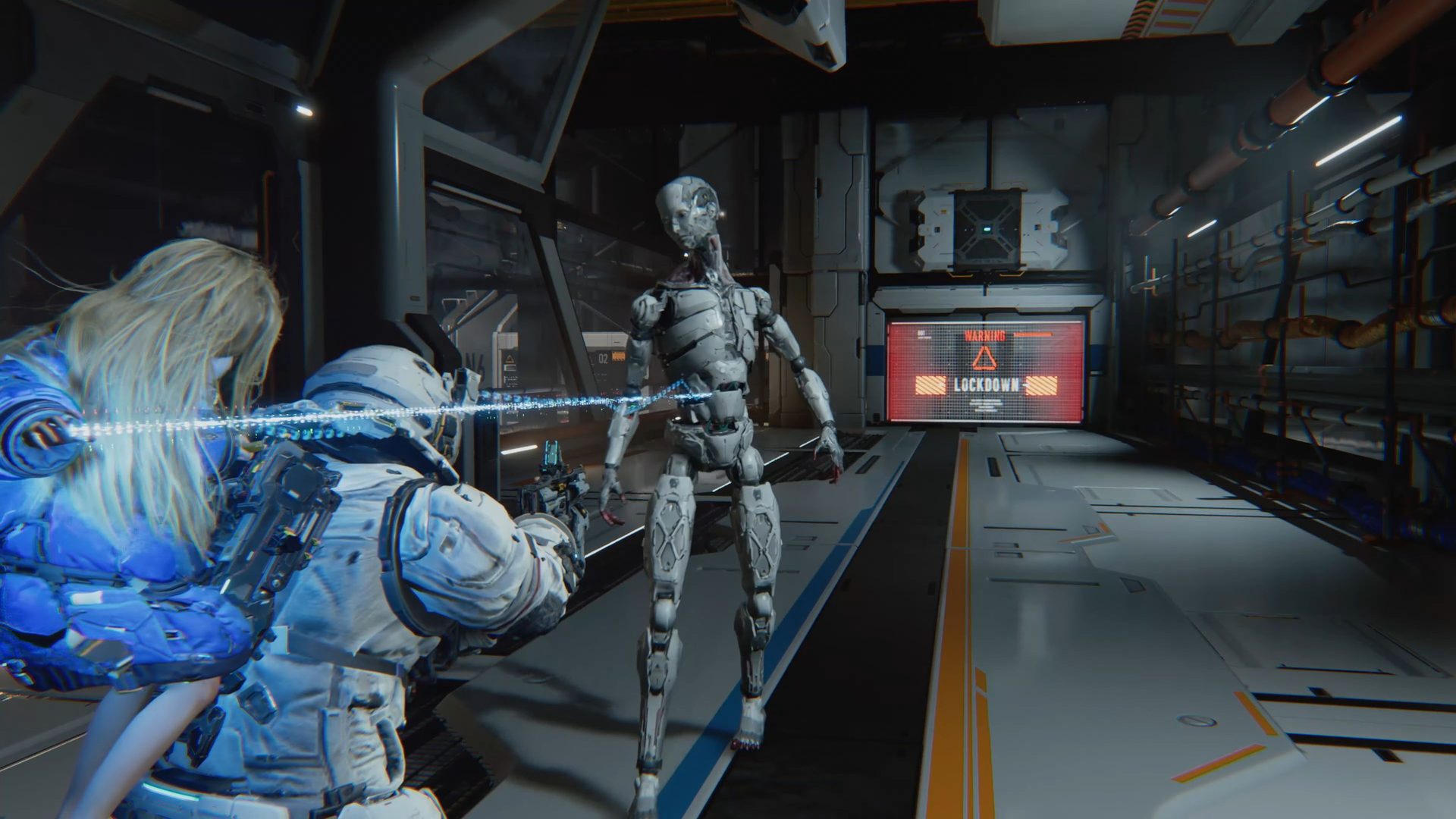
The list of RE Engine games is long. It includes Resident Evil Requiem, Monster Hunter Wilds, Street Fighter 6 and Pragmata. Onimusha: Way of the Sword runs on it as well.
Therefore, faster tools matter. Modern blockbusters take years, and much of that time goes to repeat work such as testing. If AI can run those checks overnight, teams get hours back for design.
Still, Capcom gave no date for when AI-assisted features reach a shipped game. REX arrives in stages, so the change will be gradual.
Why the Capcom RE Engine AI Plans Stand Out
Game studios are split on AI. In Japan, most developers already use generative tools, as we covered in Japanese game developers generative AI. Meanwhile, the open-source Godot project moved to keep AI-written code out.
Capcom is taking a third path. It rebuilds the engine itself so AI can assist safely, yet keeps AI output away from the final product. For a publisher of this size, that is an unusually clear position.
The conference also continues for students, with sessions in Tokyo on October 3 and in Osaka on October 17 and 18.
Want More on Capcom RE Engine AI Plans?
To see the tools programmers already use, read our guide to the best AI coding tools. For the opposite stance, check the Godot Engine AI code ban.
Frequently Asked Questions
What are the Capcom RE Engine AI plans?
Capcom is upgrading RE Engine in stages through a project called REX. The goal is an engine that both developers and AI can understand, so AI can help with coding, testing and playtesting.
What is the RE Engine?
It is Capcom’s in-house game engine, in development since 2014. Resident Evil 7 was the first game on it in 2017. Today, it powers more than 27 Capcom titles.
What does RE Engine stand for?
RE stands for Reach for the Moon. However, many players link the name to Resident Evil, because that series launched the engine.
What games use RE Engine?
Recent examples include Resident Evil Requiem, Monster Hunter Wilds, Street Fighter 6 and Pragmata. In addition, Onimusha: Way of the Sword is built on it.
Is Capcom replacing RE Engine with REX?
No. REX is a gradual upgrade, not a new engine from scratch. Instead, Capcom adds new parts such as RE:Dox, RE:Log and RE:Runtime to the existing technology step by step.
Will Capcom put AI-generated assets in its games?
Capcom says no. In a February 2026 investor Q&A, it stated that AI-generated materials will not go into game content. Rather, AI is meant to speed up internal work.
Sources
DualShockers, Gamereactor, Outlook Respawn, GameGPU, Wikipedia. *Photos: Pragmata gameplay by Capcom France, CC BY 3.0, cropped and resized; CAPCOM CO., LTD. Research and Development Building by Tokumeigakarinoaoshima, CC BY-SA 4.0, resized and placed on a blurred background.*