
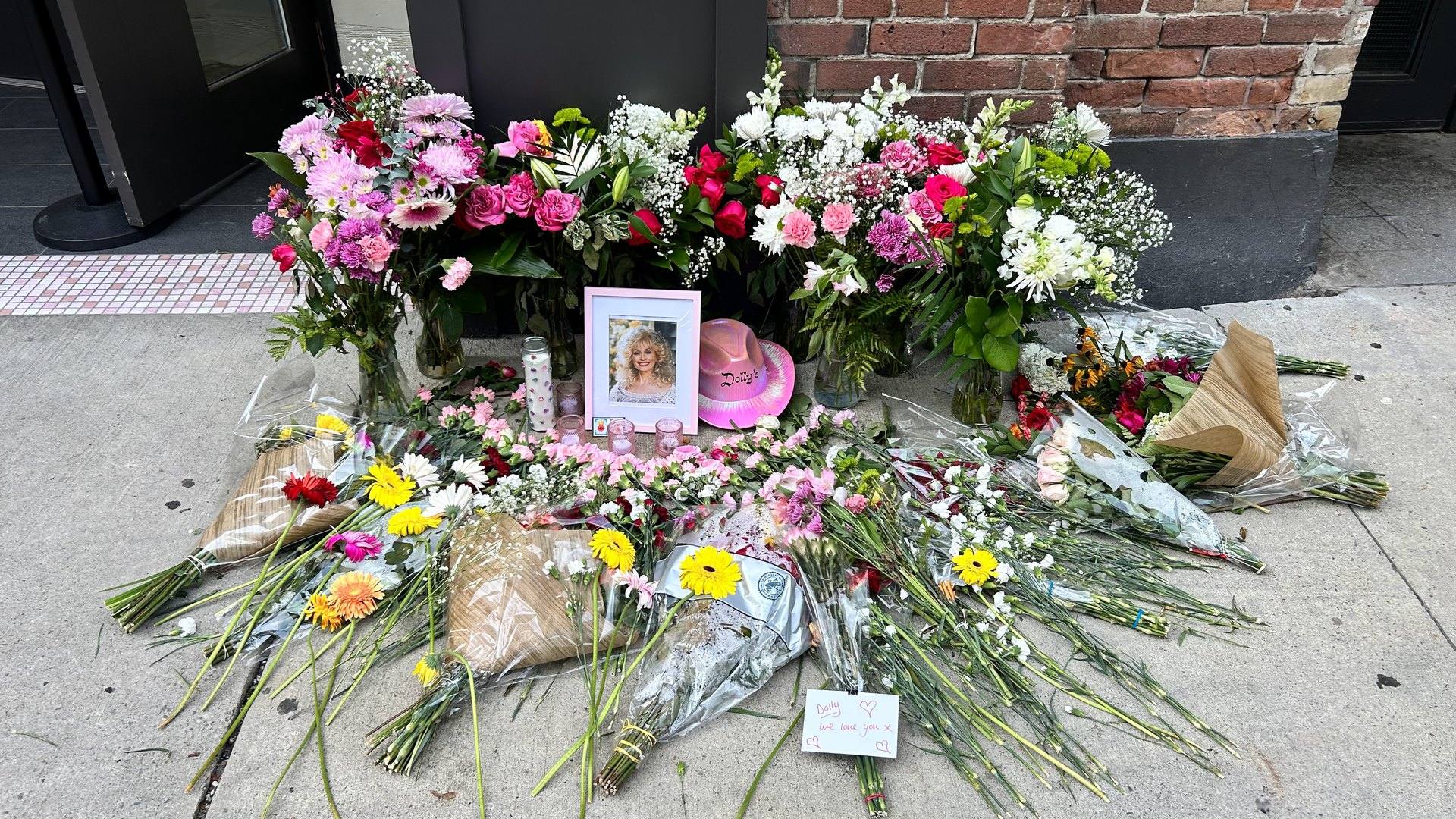
A grieving family asked the internet for one thing, and the internet sent generated audio instead. This is the Stella Parton fake AI content story.
Ten days after her sister died, Stella Parton wrote the sentence that turned into a search trend. The Stella Parton fake AI content statement went up on Instagram on Friday, September 4, 2026, and it named the problem directly. Dolly Parton died on August 25, 2026, aged 80, and the synthetic material started circulating before that.
The Stella Parton fake AI content statement, in her words
Stella Parton, 77, posted a two-slide letter rather than a soundbite, as NBC News first reported. She thanked fans for genuine support, then described what else had arrived.
“There is a tremendous amount of AI and endless garbage being posted everyday and it’s been challenging to absorb and or ignore,” she wrote. She also spoke of being “subjected to incredible pressure and insensitivity from strangers” because of a life lived in public.
Her sharpest line targeted the incentive rather than the technology. “As time passes, those who are in the business of exploiting the loss and tragedies of others on a daily basis will move on to the next stampede of endless misinformation,” she added.
She closed with a request. “It’s not about the most clever comments, fake AI garbage or snarky tweets. At the end of the day or the end of a life, how will you feel about yourself?”
The fake Dolly Parton AI voice recording, and how Snopes caught it
One artifact makes the abstraction concrete. Snopes rated as Fake a widely shared video claiming to carry a recording of Dolly Parton revealing her “final wish” to be buried beside her late husband Carl Dean.
The footage was real. However, the voice was not. Snopes concluded the audio came from an AI tool mimicking her vocals, and found no evidence she ever made the statement in any setting.
The timeline is the damning part. According to Snopes, an account posted the video to Instagram on August 12, 2026, nearly two weeks before she died, and fact checkers traced the same soundtrack to a TikTok account as far back as December 2025.

The six signals that exposed it
Catching this one needed no forensic tooling. Each of these is something an ordinary reader could have checked.
| Signal | What Snopes found |
|---|---|
| Timing | Video posted August 12, nearly two weeks before the death |
| Older copies | Same audio traced to a TikTok post from December 2025 |
| Internal contradiction | Audio claimed intensive care at a time with no such indication |
| News silence | Zero results on Google, Bing, DuckDuckGo and Yahoo for the transcript |
| Missing pause | No natural break before “It’s only a matter of time” |
| Overall texture | An AI-sounding quality of inauthenticity across the clip |
Notice the pattern. Five of the six are context checks rather than audio analysis, which is what makes them usable by anyone.
What is AI slop, and why grief attracts it
AI slop is the informal name for synthetic content that someone mass-produces for attention rather than meaning. It is cheap, fast, and indifferent to whether it is true.
Deaths of famous people make unusually profitable ground for it. Search demand spikes, emotions run high, and audiences accept a farewell message as plausible. As a result, the fake Parton audio already existed and simply found its moment.
That is why Stella Parton framed it as a business rather than a glitch. Someone was operating an attention pipeline, and her family became the raw material.
Why a coincidence made the fake believable
The fake worked partly by luck. It claimed Dolly Parton wanted to be buried next to Carl Dean, and TMZ did report that the family planned exactly that.
Consequently a reader who checked the substance of the claim would have found corroboration, even though someone had fabricated the recording. This is the hardest category of synthetic media to dismiss, because the underlying fact holds and only the evidence is fake.
The wider pattern of AI recreations after death
Recreating dead performers is no longer fringe. Families authorise some projects and never hear about others, which is precisely the line the Stella Parton fake AI content statement drew.
We covered a consented example in the Osbourne family AI avatar project, where the estate drove the work. The Parton case sits at the opposite end, with no involvement and no consent from anyone connected to her.
What you can do when the next one appears
Slow down before sharing. A farewell clip that no news outlet has reported is almost certainly not real, because a genuine recording of a global star would lead every bulletin within the hour.
Check the posting date against the timeline of events, and search a distinctive line from the transcript. Furthermore, look at the account: aggregator pages that post constantly about many celebrities are the usual source. Reporting the post does more than not sharing it, since engagement of any kind feeds the same pipeline.
Want More on Stella Parton Fake AI Content?
For another case of a generated image of real people spreading as though it were real, read about the Meagan Good AI Instagram post. And for the legislative answer now moving through Congress, see our report on the Bernie Sanders AI legislation.
Frequently Asked Questions
What did Stella Parton say about fake AI content?
In an Instagram letter on September 4, 2026 she wrote that people were posting a tremendous amount of AI and endless garbage daily, and accused those exploiting grief of moving on to the next stampede of misinformation.
Was the Dolly Parton final wish recording real?
No. Snopes rated it Fake. The footage was genuine but an AI tool generated the voice, and fact checkers found no evidence she ever made the statement. It circulated before her death.
When did Dolly Parton die?
August 25, 2026, at the age of 80, following a brief battle with cancer that became public only after she died. Her sister posted the statement ten days later, on September 4.
What is AI slop?
It is the informal term for synthetic content that someone mass-produces for attention rather than accuracy. Volume is the point, so it clusters around whatever people already search for, including deaths.
How can you spot an AI voice clone?
Listen for missing natural pauses and flat emotional texture. More reliably, check context: whether outlets reported the quote, when the clip first appeared, and whether older copies of the same audio exist.
Is it legal to make AI content of someone who died?
Rules vary by state and country, and enforcement lags badly. Several proposals now target synthetic media and likeness rights, but at present most takedowns depend on platform policy rather than statute.
Sources
NBC News, Billboard, Snopes. *Photos: Flowers and notes left at the Dolly Parton memorial outside Dolly’s bar in Toronto by Wiki.cullin, CC0, cropped and resized. Dolly Parton at Wolf Trap, 2011 by Leeann Cafferata, CC BY 2.0, cropped and resized.*