
No wire. No antenna. No satellite. Just a camera that knows what grass looks like — and a lawn that looks patchy for the first two days.
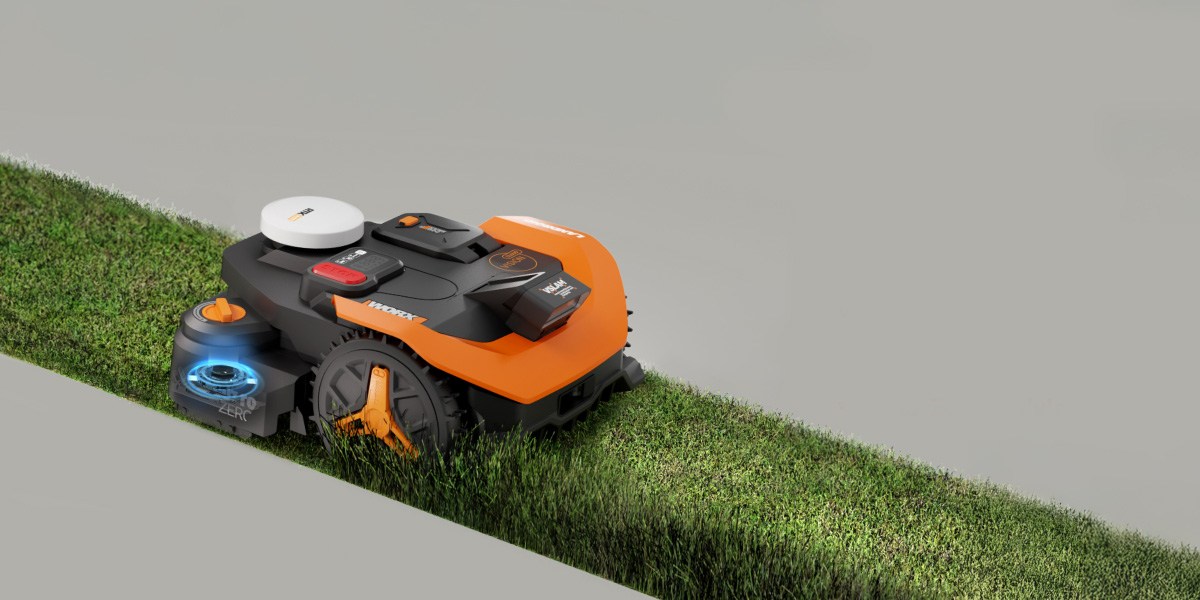
What Is the Worx Landroid Vision?
This Worx Landroid Vision review covers the Worx Landroid Vision family ($1,199 for 1/4 acre, $1,799 for 1/2, $2,299 for 1 acre; street prices dip to ~$849 in seasonal sales) is this season’s breakout search in robotic mowing — and the purest expression of camera-only navigation on the market.
The pitch is radical simplicity: the AI treats grass itself as the boundary. No buried wire, no RTK antenna to mount on the fence, no reference station. T3 called the Vision a cracking choice for technophobes — with caveats we will get to.
The AI Inside: Grass as the Boundary
The Landroid Vision runs semantic segmentation — a neural network classifying every pixel the camera sees as ‘grass’ or ‘not grass’ in real time. Where grass ends, the mower turns. That single trick eliminates the entire installation step that defines every other navigation approach.
The same network handles obstacle recognition — people, pets, toys — and the newer Vision Cloud models add optional cloud-RTK for centimeter precision on complex plots. It is a genuinely clever, genuinely different AI architecture; its trade-offs are just as real.
Setup and Price: The Strong Suit
Unboxing to mowing takes minutes, not an afternoon — there is simply nothing to install. For straightforward suburban lawns, that convenience plus the lowest street prices in the roundup (~$849 in sales) makes a compelling value case.
Moreover, the three-size ladder lets you match coverage honestly instead of overpaying for acreage you do not have.
Where It Falls Short
Pure vision has no map — and it shows. Coverage is semi-random rather than systematic: EasyLawnMowing’s in-depth test found it can leave areas untouched initially, taking a day or two to fully cover larger lawns, with criss-cross lines that need a couple of days to fade into an even finish. GPS and LiDAR rivals leave a neater lawn after day one.
Camera navigation also inherits camera limits: it depends on visual conditions, and very tall or dormant grass confuses a network trained to recognize healthy turf. In short — you trade mowing elegance for setup simplicity. On a simple lawn that trade is excellent; on a complex one, buy a mapper.
How Worx Landroid Vision Cloud Compares
Pros and Cons
What we liked
- Zero installation — no wire, no antenna, no station, period
- Clever grass-segmentation AI with obstacle recognition
- Lowest real-world prices in the category during sales
- Three honest size tiers up to 1 acre
What could be better
- Semi-random coverage — misses spots early, needs days to even out
- No persistent map: no zones, no systematic lines
- Struggles with very tall or dormant grass
- Cloud-RTK upgrade erodes the simplicity advantage
Who Should Buy the Worx Landroid Vision?
Owners of simple, open lawns who want robotic mowing with literally zero setup and the lowest buy-in — and who will not stare at the criss-cross pattern in week one. Complex, zoned or manicured-edge yards should pay for a mapping mower instead.
Our Verdict on the Worx Landroid Vision
The Landroid Vision earns its breakout status honestly: it removed every barrier that keeps people from buying a robot mower, and charges the least for it. It is also the least precise machine in our best AI robot lawn mower guide by design. Simple lawn, simple buyer, simple win — just know which lawn you have.
Frequently Asked Questions
How does the Worx Landroid Vision navigate without wires or GPS?
A neural network classifies every camera pixel as grass or not-grass in real time — grass itself is the boundary. Nothing is buried, mounted or surveyed.
Does the Landroid Vision miss spots?
Early on, yes — coverage is semi-random, and tests show it can take a day or two to fully cover larger lawns before the finish evens out. Mapping rivals look neater after one day.
How much does the Worx Landroid Vision cost?
$1,199 (1/4 acre), $1,799 (1/2 acre) and $2,299 (1 acre) list — with street prices dipping to about $849 in seasonal sales, the lowest real-world entry in the category.
Can the Landroid Vision handle tall grass?
Poorly — the vision network is trained on healthy turf, and very tall or dormant grass confuses boundary detection. Do the first cut conventionally, then let it maintain.
Does the Landroid Vision avoid pets and people?
Yes — the same camera AI recognizes and avoids obstacles including pets and people, one benefit of vision-first navigation.
Worx Landroid Vision or eufy E15?
Vision for the absolute simplest setup and bigger size options; E15 for mapped, more systematic mowing on small lawns at a similar price.
Want More Than This Worx Landroid Vision Review?
Comparing models? Our full best AI robot lawn mower guide ranks every mower here by AI stack, slope rating and price. Want mapping at a similar price? Our eufy E15 review covers the alternative. For everything else we test, browse our AI hardware reviews.