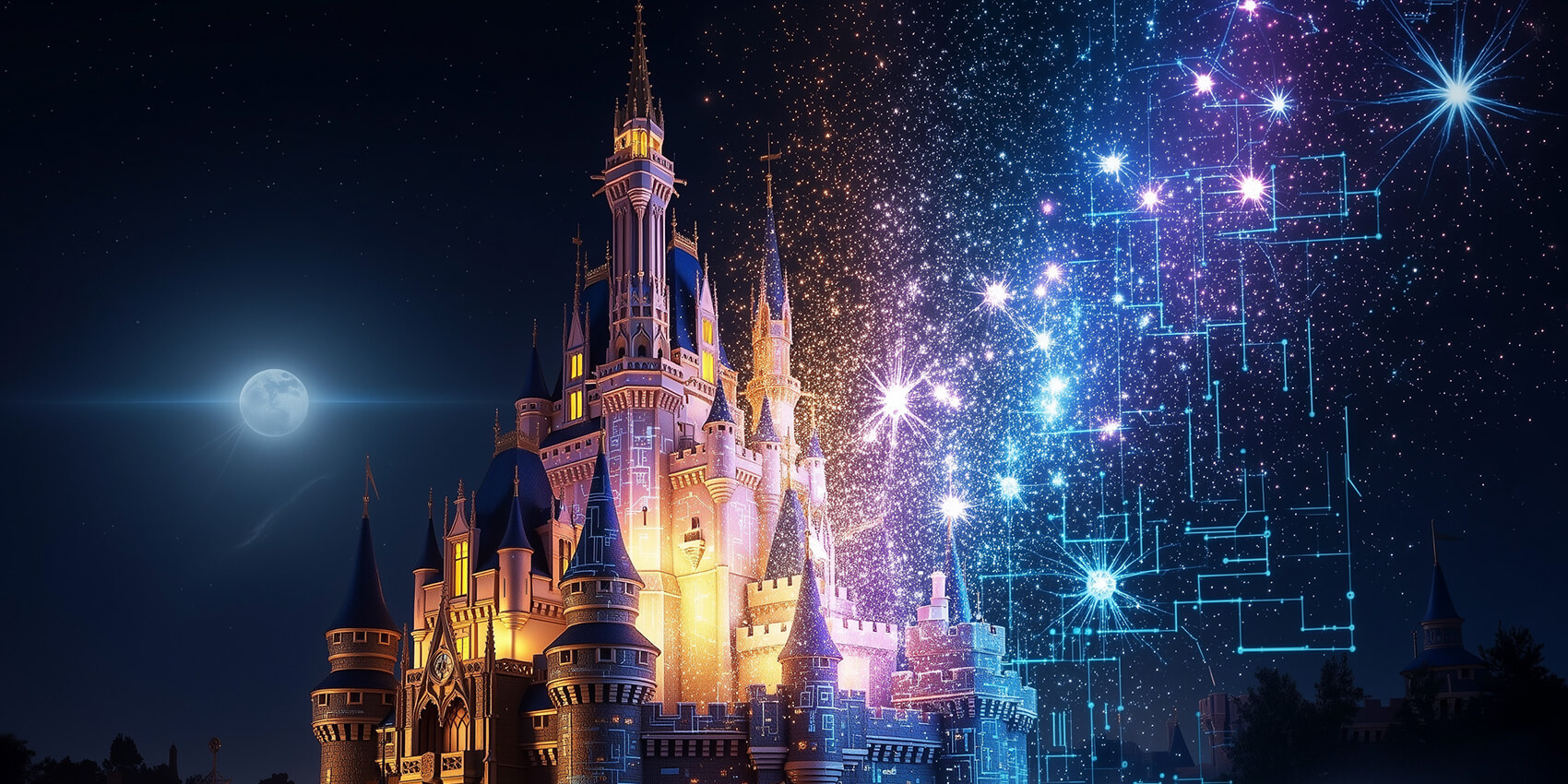
The Disney OpenAI deal could become the blueprint for how generative AI and creative industries learn to work together, or collide.
The Disney OpenAI partnership marks a major turning point for generative AI in the entertainment industry. In December 2025, The Walt Disney Company confirmed a three-year licensing and investment deal worth $1 billion. This move made Disney OpenAI’s first large-scale content licensing partner.
The agreement centers on Sora, OpenAI’s AI video generation platform, and ChatGPT Images. OpenAI will gain licensed access to characters and environments from Disney, Pixar, Marvel, and Star Wars. As a result, the platform will enable short, fan-inspired videos and images starting in early 2026.
Notably, the deal excludes the likeness and voices of real actors. Disney+ is expected to feature selected Sora-generated content. This would mark one of the first officially licensed uses of AI-generated video on a major streaming platform.
How Disney Plans to Use OpenAI Internally
Beyond licensing, Disney will become a major enterprise customer of OpenAI. The company plans to use OpenAI APIs to develop new features and experiences across Disney+. It will also deploy ChatGPT internally to support employees.
This move puts Disney among a growing number of global companies that integrate generative AI into creative and operational workflows. However, Disney’s approach stands out due to its focus on licensed content and controlled deployment.
In other words, this is not an experiment happening in the shadows. It is a public, strategic commitment.
A Dual Strategy: Partnership With OpenAI, Pressure on Google
The Disney OpenAI partnership arrived alongside a very different announcement. On the same day, however, Disney issued a cease-and-desist letter to Google. The company accused Google of unauthorized use of Disney intellectual property in its AI models.
As a result, Disney alleges “massive copyright infringement.” The company draws a clear line between licensed AI use and unapproved data training.
In this context, industry analysts see this as a calculated dual strategy. Through this move, Disney establishes a commercial benchmark for generative AI training and output by licensing content to OpenAI. At the same time, it strengthens its legal position against companies that rely on unlicensed data.
As a result, this approach could influence how AI licensing frameworks evolve, especially as courts and regulators grapple with AI copyright disputes.
Creative Industry Reactions and AI Responsibility
Disney CEO Bob Iger described the collaboration as a way to “carefully and responsibly expand our storytelling through generative AI, while respecting and protecting creators and their work.”
Not everyone is convinced. The Writers Guild of America has raised concerns. The group argues that the deal risks normalizing the extraction of creative labor by technology companies, even under licensing agreements.
OpenAI, for its part, has reiterated commitments to responsible AI development. These include safety policies, age-appropriate controls, and systems that prevent harmful or illegal content generation.
Why This Deal Matters
The Disney OpenAI partnership may become a reference point for how creative leaders and AI companies work together. Rather than treating AI as an external threat, Disney is attempting to shape the rules from the inside.
Whether this model will ease tensions or deepen industry divides remains to be seen. However, one thing is clear: generative AI storytelling has entered a new, more formal era, and Disney intends to be part of defining it.
Want more context on the Disney OpenAI partnership?
The Disney OpenAI deal is part of a wider shift toward licensed and controlled use of generative AI. While this article focuses on the partnership itself, AI-powered video systems play an increasingly visible role in how such collaborations may evolve.
To explore that broader landscape, you can also check our overview of the ai video generation platform ecosystem, which looks at how AI video tools are developing across different use cases.
Frequently Asked Questions
What is the Disney OpenAI partnership about?
The Disney OpenAI partnership is a multi-year licensing and investment agreement that allows OpenAI to use licensed Disney-owned content for AI-generated images and videos, while Disney adopts OpenAI technology across its platforms.
Will OpenAI be allowed to use Disney characters?
Yes, OpenAI will have licensed access to selected characters, environments, and assets from Disney, Pixar, Marvel, and Star Wars, under strict usage conditions.
Does the Disney OpenAI deal include Sora?
Yes, the agreement includes Sora, OpenAI’s AI video generation platform, which will be used to create short, user-driven videos inspired by licensed Disney content.
Will AI-generated Disney content appear on Disney+?
Selected AI-generated videos created with Sora are expected to be available on Disney+, marking one of the first officially licensed uses of AI-generated video on a major streaming platform.
How does this deal impact AI copyright and licensing?
The Disney OpenAI deal reinforces licensed content as a commercial standard for generative AI, strengthening arguments against unlicensed use of intellectual property by other AI companies.