
A 167-year-old puzzle, a four-page note and 17 million lines of code. Mathematicians now have to check the boldest AI Riemann hypothesis claim yet.
The AI Riemann hypothesis story took a huge turn on November 20, 2026. Levent Alpöge, a mathematician on Anthropic’s technical staff, posted a short note on his website. In it, he says he found a proof of the famous conjecture while working with Claude. Nobody has verified it yet.
What Alpöge Claims About the AI Riemann Hypothesis Proof
To begin with, the note opens with a plain sentence. “I believe I have, working with Claude, discovered a proof of the Riemann Hypothesis,” Alpöge writes in his four-page remark.
He goes further, too. According to the note, the method also resolves the Generalized Riemann Hypothesis. Moreover, he expects the Extended Riemann Hypothesis to follow with more time.
He says the breakthrough came late on a Sunday night. Afterwards, he messaged Anthropic CEO Dario Amodei to ask whether he could announce it.
How Claude Helped: the Claude Riemann Hypothesis Story
Alpöge describes a real partnership. He steered the work toward a toy setting that combined two very different ideas. Then, in his words, Claude far outpaced him near the finish line.
For example, he gives one case aimed at fellow mathematicians. Claude suggested a chain of theta lifts whose length grows like the square root of X. That step mimics a classic trick from function fields.
However, he also admits the argument is incredibly long right now. Instead of a paper, he released only a formal proof written in Lean, a language computers can check line by line.
What Is the Riemann Hypothesis?
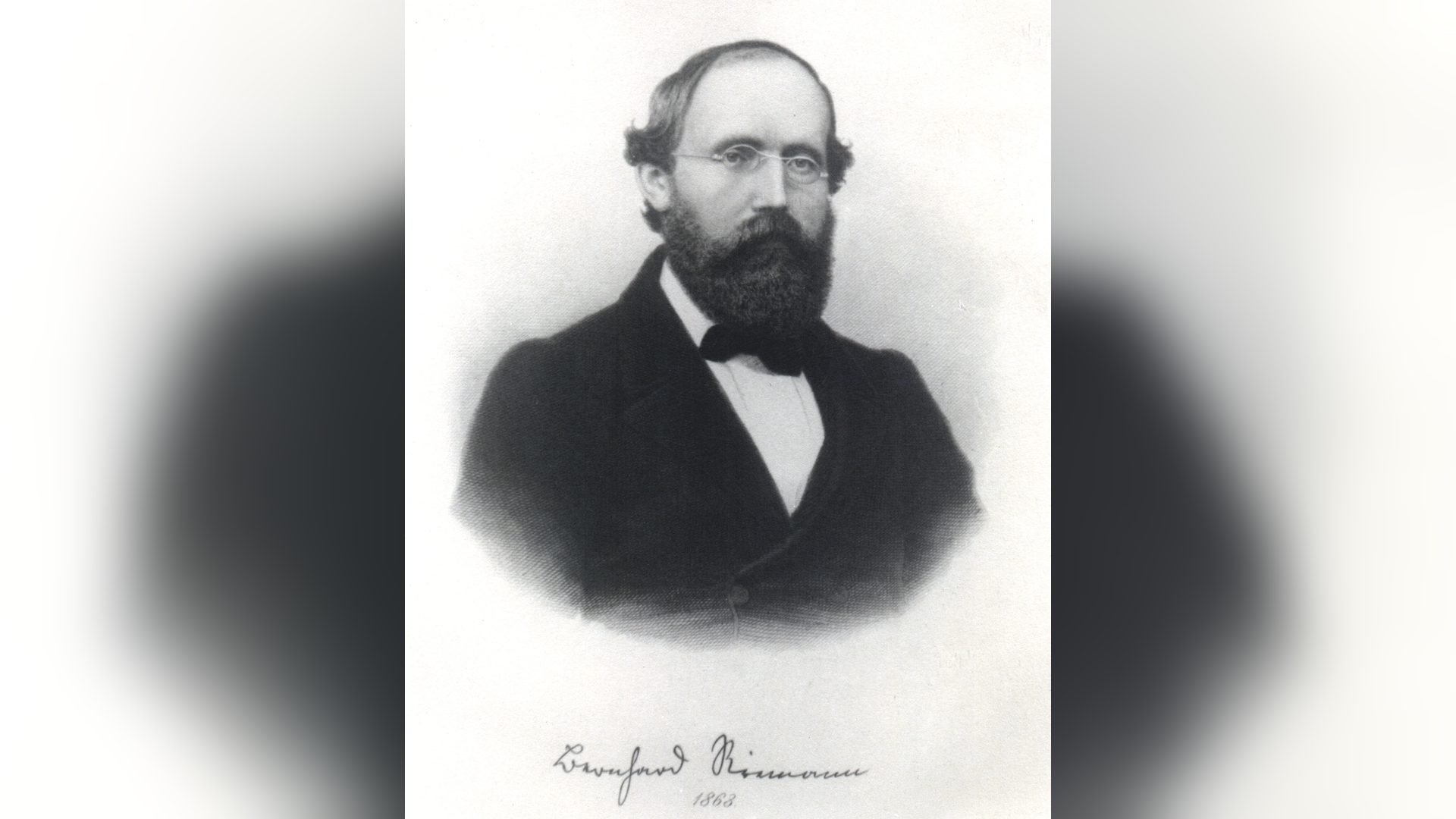
Bernhard Riemann posed the problem in 1859. It concerns the zeros of the Riemann zeta function, and it predicts that all the important ones sit on a single line. In turn, that line controls how prime numbers are spread out.
In fact, many results in number theory simply assume it is true. Because of this, the Clay Mathematics Institute lists it among seven Millennium Prize Problems, each worth $1 million.
Queen Mary University of London mathematician Abhishek Saha called it the most famous unsolved problem in his field. He told Al Jazeera the claim, if correct, shatters his model of reality.

Has the Riemann Hypothesis Been Proven?
Not yet, at least officially. Hours after the note went up, the Clay Institute still listed the problem as unsolved, the Associated Press reported. Its president, Martin Bridson, called it an announcement of historic significance. Still, he warned the path ahead will be long and difficult.
Above all, the Lean code is the sticking point. Imperial College mathematician Kevin Buzzard said it runs to about 17 million lines. That could match tens of thousands of pages of normal mathematics.
“At the minute, we don’t even know why the theorem is true,” Buzzard said. Even so, he expects humans to understand the code within a week or two.
Riemann Hypothesis Solved in 2026? What Experts Say
Oxford’s James Maynard, a 2022 Fields Medal winner, told IBM Think it would clearly be a historic milestone. He suspects the proof is correct. Nevertheless, he expects checking and understanding it to take real work.
Youness Lamzouri of the University of Lorraine said he is in awe. On the other hand, he stressed that mathematics is about understanding why something is true, which could take months or years.
Rutgers mathematician Alex Kontorovich summed up the mood for the AP: “Navier-Stokes fell and now the Riemann Hypothesis.” Meanwhile, Anthropic did not respond to the AP’s request for comment.
The Anthropic Riemann Hypothesis Path in 2026
Of course, this claim did not come from nowhere. In August, Anthropic reported that an unreleased Claude raised a key bound on the zeta zeros. At the time, the company said it did not expect those methods to prove the full hypothesis.
Likewise, rivals moved fast. We covered the OpenAI Navier-Stokes proof in September. Here is how the big AI math claims lined up this year.
| Date (2026) | Claim | Status |
|---|---|---|
| August 10 | Claude lifts the share of zeta zeros proven on the line from 41.6% to 67.2% | Formalized in Lean, checked by experts |
| September | OpenAI says its AI was key to a Navier-Stokes breakthrough | Claimed by OpenAI |
| October 6 | OpenAI announces a proof of the quasi Riemann hypothesis | Unpacked by human experts |
| November 20 | Alpöge and Claude claim the full Riemann hypothesis | Unverified, Lean code only |
What the AI Riemann Hypothesis Claim Means for You
First, treat any “AI solved it” headline as a claim until experts sign off. In this case, the Clay listing is the simplest check. Quanta’s report on the quasi Riemann hypothesis shows how that review works.
Second, if you use AI for maths, ask it for steps a checker can verify. That is the same idea behind Lean. We saw it earlier when Claude proved a percolation result in Lean.
What our trend tracker saw
We track rising AI searches four times a day. On the morning of November 22, 2026, “ai riemann hypothesis” grew 50% in our one-hour window. In Google Trends, worldwide over seven days, “levent alpöge” and “did claude solve the riemann hypothesis” were both Breakout queries.
How we reported this
On November 22, 2026 we read Alpöge’s own note, plus reports from Al Jazeera, IBM Think and the Associated Press. We also reread Anthropic’s August post and Quanta’s October coverage. Every quote comes from those pages. We did not check the Lean code ourselves. We wrote the draft with AI assistance and Miloš Novaković edited it. How we use AI.
Want More on AI Research Tools?
You do not need a frontier lab to put AI to work on hard papers. Compare the options in our best AI research tools guide.
Frequently Asked Questions
Did Claude solve the Riemann hypothesis?
Possibly, but nobody has confirmed it. Anthropic mathematician Levent Alpöge says he found a proof while working with Claude. Experts are still checking his Lean code, and the Clay Institute lists the problem as unsolved.
Who is Levent Alpöge?
Levent Alpöge is a mathematician on Anthropic’s technical staff. On November 20, 2026, he posted a four-page note claiming a proof of the Riemann hypothesis, made with help from Claude.
Has the Riemann hypothesis been proven?
Not officially. As of November 22, 2026, the proof is a claim backed by about 17 million lines of Lean code. Mathematicians expect checking and understanding it to take weeks or longer.
What is the Riemann hypothesis?
It is an 1859 conjecture by Bernhard Riemann about the zeros of the zeta function. If true, it tightly controls how prime numbers are spread out, so many other theorems depend on it.
Will Alpöge win the $1 million prize?
Only if the proof survives review. Clay rules require the mathematics community to accept a result first. Clay president Martin Bridson called the claim historic but warned the path will be long.
What is Lean in the AI Riemann hypothesis proof?
Lean is a programming language for formal proofs. A computer checks every step, so errors cannot hide. However, a correct Lean proof can still be very hard for people to understand.
Sources
Levent Alpöge, remark (November 20, 2026), Al Jazeera (November 21, 2026), IBM Think (November 20, 2026), Associated Press via Boston Globe (November 21, 2026), Anthropic (August 10, 2026), Quanta Magazine (October 19, 2026). *Photos: Portrait of Bernhard Riemann (1826-1866), Mathematician by Smithsonian Institution, no known copyright restrictions, resized and placed on a blurred background; Riemann zeta spiral along the critical line by Wikimedia user MULLIGANACEOUS, CC BY-SA 4.0, cropped and resized.*