A thumb-sized circuit board, a roll of toilet paper and a TV in the boardroom. Meet the OpenAI recording device case.
The OpenAI recording device case broke on October 13, 2026, when the Justice Department said an OpenAI engineer had been arrested. Prosecutors say he hid an audio recorder in an executive conference room at the company’s San Francisco offices. No court has convicted him, and his lawyer stresses the presumption of innocence. Here is what the complaint alleges, what OpenAI says, and what happens next.
OpenAI Recording Device: What Happened
OpenAI staff found the device on September 30. According to the complaint, it sat in a USB port on the back of a television in an executive conference room, wrapped in toilet paper.
The company says the recorder went in around September 28, so it ran for about two days. Investigators found its contents encrypted. OpenAI then reported the find to the FBI and the case moved fast.
Agents arrested the engineer on Friday, October 9. He made his first appearance in the U.S. District Court for the Northern District of California on Tuesday, the Associated Press reported.
Who Is Abdulrahman Alfozan?
The accused is Abdulrahman Alfozan, 35, a Saudi national and a legal permanent U.S. resident. He joined OpenAI as an engineer in July 2025. OpenAI says he worked on the product team.
In addition, The San Francisco Standard reports that his LinkedIn profile lists him as engineering lead on the company’s AI agents platform, the area behind tools like the OpenAI agent builder. Before that, he spent five years at Meta and later was a founding engineer at the logistics startup Nash.
He also holds a master’s degree in data science from UC Berkeley. Meanwhile, a YouTube video last month described him as the only Saudi employee at OpenAI.
How the Recording Device Found in OpenAI Office Was Traced
OpenAI says its technical surveillance countermeasures team found the recorder during a sweep of the room. Employees then used the company’s own AI models to identify the hardware and trace where it came from.
The room had no camera at the time. However, CCTV footage elsewhere showed Alfozan near the room about six times in September, although he had no permission to enter it. OpenAI later added a camera.
On October 5, that camera allegedly caught him walking in and checking behind the television. As a result, the FBI says the footage tied him directly to the hiding spot.

OpenAI Recording Device Timeline From the Complaint
The criminal complaint lays out a tight sequence of events. The table below lists each step as reported by The San Francisco Standard and CBS News. Every item is an allegation.
| Date (2026) | What the complaint alleges |
|---|---|
| Sept. 24 to 30 | A chatbot account linked to his spouse asks how to build, hide and remotely access an audio recorder |
| Around Sept. 28 | The recorder goes into the conference room TV |
| Sept. 30 | OpenAI finds the device during a room sweep |
| Oct. 5 | A new camera shows him looking behind the TV; his unattended bag holds a second recorder |
| Oct. 6 | He retrieves the bag, which no longer holds the recorder |
| Oct. 9 | FBI arrest; OpenAI fires him the same day |
| Oct. 13 | First court appearance and Justice Department announcement |
| Oct. 19 | Detention hearing before Magistrate Judge Alex G. Tse |
The complaint also says he used a work productivity tool to look up building addresses, meeting rooms, room sizes and executive calendars. In short, prosecutors argue the plan was researched in advance.
What the Device Was and What the Room Held
According to The San Francisco Standard, the recorder was a Seeed XIAO ESP32-S3 Sense. It is a tiny development board with a microphone and microSD storage, and it sells online for about $24.
The second device was similar. Notably, the FBI affidavit says someone customized it to hide stored data, “such as potentially intercepted audio communications.”
So why that room? It hosted executive meetings on research, product plans, business deals and government work. On the other hand, the complaint does not say what he planned to do with any recordings, and prosecutors have not named a motive.
OpenAI Spy Case: Charges, Penalties and Defense
Despite the “OpenAI spy” headlines, the actual charge is narrower. Prosecutors accuse Alfozan of using, or trying to use, a device to intercept oral communications. If convicted, he faces up to five years in prison, a $250,000 fine and three years of supervised release.
Still, officials framed it as a national security matter. U.S. Attorney Craig Missakian said, “For us it is a matter of national security.” Similarly, FBI Director Kash Patel called protecting American AI innovation a top counterintelligence priority.
His lawyer, William Pernik, told CBS News that Alfozan is presumed innocent. He also urged against “jumping to conclusions at this very early stage of the case.”
What Is Corporate Espionage, and Why Are AI Labs a Target?
Corporate espionage means secretly gathering a company’s confidential information, such as research, plans or deals. It is illegal in the U.S. when it involves theft of trade secrets or, as here, intercepting private conversations.
AI labs are an obvious target. Their model weights, training methods and launch plans are worth billions, as the race around releases like GPT-6 Astra shows.
For now, OpenAI says it has no sign that he accessed or took model weights, source code or customer data. Even so, the company says it has evidence he planned to place more recorders in sensitive spaces.
OpenAI Recording Device Case: What Happens Next
Alfozan remains in federal custody. The next step is the detention hearing on October 19, where a judge decides whether he can be released before trial.
Meanwhile, the FBI investigation is ongoing, and OpenAI says it will keep supporting it. The company said it treats protecting its technology, data and people “as a matter of national importance.”
We will update this story after the hearing. Until a court rules, every claim above remains an allegation.
Want More on OpenAI Recording Device?
For the bigger picture at OpenAI this month, read our OpenAI Dev Day 2026 recap, which covers every product the company announced. It shows exactly what kind of plans sit on the table in rooms like this one.
Frequently Asked Questions
What is the OpenAI recording device case?
Federal prosecutors say OpenAI engineer Abdulrahman Alfozan hid an audio recorder behind a TV in an executive conference room in San Francisco. OpenAI found it on September 30, 2026. No court has convicted him.
Who is Abdulrahman Alfozan?
Alfozan is a 35-year-old Saudi national and U.S. permanent resident who joined OpenAI as an engineer in July 2025. Earlier, he worked at Meta and the startup Nash. OpenAI fired him on October 9.
How did OpenAI find the recording device?
Its technical surveillance countermeasures team found the device during a conference room sweep. Staff then used OpenAI’s own AI models to identify the hardware and trace its origin before calling the FBI.
What charge does the OpenAI engineer face?
Prosecutors charged him with using, or trying to use, a device to intercept oral communications. The maximum penalty is five years in prison, a $250,000 fine and three years of supervised release.
Did the engineer steal OpenAI model weights?
OpenAI says it has no indication he accessed or took model weights, source code or customer data. However, the FBI investigation is still ongoing, so that picture could change.
When is the next court date?
The court set a detention hearing for October 19, 2026, before U.S. Magistrate Judge Alex G. Tse in San Francisco. In the meantime, Alfozan remains in federal custody.
Sources
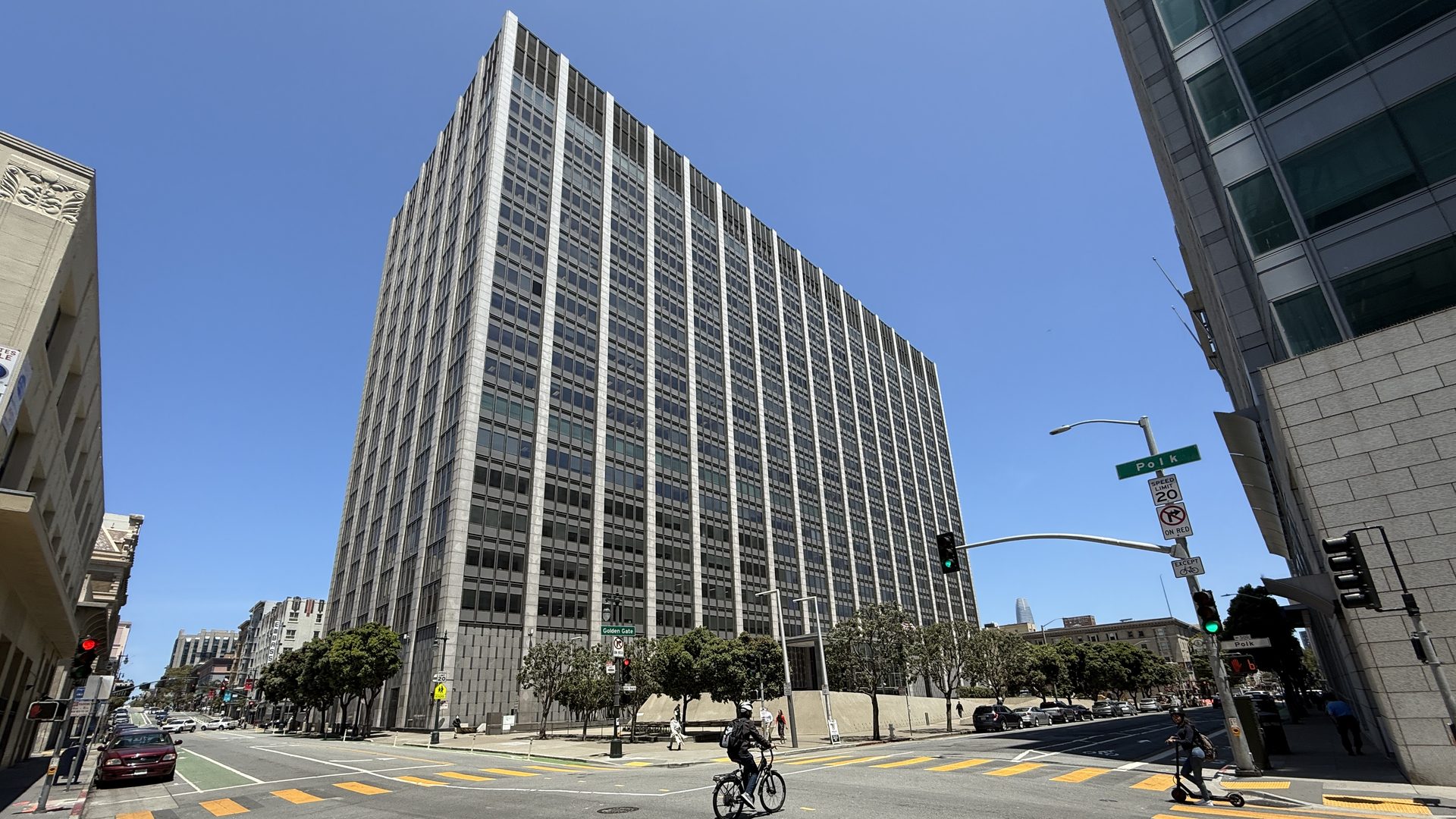
Associated Press via ABC News (October 13, 2026), The San Francisco Standard (October 13, 2026), CBS News (October 13, 2026). *Photos: Phillip Burton Federal Building & United States Courthouse by Marincyclist, CC BY-SA 4.0, cropped and resized; Pioneer Building, San Francisco (2019) by HaeB, CC BY-SA 4.0, cropped and resized.*