One unreleased model, about 4,000 open questions, and 722 papers dropped on GitHub in a single day. That is the Open AI math release everyone is arguing about.
The open AI math story just got much bigger. On October 6, 2026, OpenAI published 722 mathematical manuscripts written by an internal model that the public cannot use yet. The papers sit in a public GitHub repository, grouped into 372 families of related results. However, OpenAI itself admits that some of them may contain mistakes.
Open AI Math Release: What Landed on GitHub
The repository is called openai/math. It holds PDFs, their source files and a library of Lean code. In addition, every manuscript comes with a citation block, and the whole thing carries an Apache 2.0 license.
OpenAI describes the contents as manuscripts and supporting proof artifacts produced by an internal model. The company sorted them by mathematical discipline. As a result, a number theorist and a physicist can each jump straight to their own shelf.
This is not a single headline proof like last month. Instead, it is a bulk release, and the scale is the point. Interesting Engineering called it the largest math release OpenAI has made.
OpenAI Math Results by the Numbers
The figures come from the repository and from reports on OpenAI’s research post. First of all, the model received roughly 4,000 problems. From those attempts, OpenAI kept 722 manuscripts in 372 families.
Each accepted result was cheap by research standards. On average, one result used about three hours of ChatGPT Pro thinking compute, according to the README. For comparison, the Navier-Stokes run in September burned through millions of dollars.
Only ten families include abridged summaries of how the model reasoned. Therefore, readers see the finished argument for most papers, but not the path the model took to reach it.
Which Open AI Math Problems Got Answers
The range is wide. Reports list work in number theory, complexity theory, mathematical physics and geometry. The ten results with reasoning summaries include the irrationality exponent of pi and the symmetric and general Mahler conjectures.
That same list also names Kaplansky’s direct-finiteness conjecture in characteristic two. Meanwhile, physics gets the Mezard-Parisi formula for diluted spin glasses. Other manuscripts touch NP-hardness, arithmetic progressions and the relativistic Vlasov-Maxwell equations.
Unite.AI also points to work on a zero-free region for the Riemann zeta function. Still, none of this means a famous prize problem fell this week. OpenAI speaks of solutions or significant progress, which is a careful phrase.
Lean Proofs: How Much of the Open AI Math Dump Is Checked
Lean is a proof assistant. It lets a computer check every logical step of an argument from the stated assumptions. Because of this, a Lean proof is far harder to fake than a confident PDF.
Not every manuscript has one. The README says so directly and promises more formalizations as OpenAI obtains them. It also carries a blunt warning: some of the unformalized results could have issues.
Tech Insider counted the gap. By its tally, 235 of the 372 families have a Lean page, and 162 papers have fully formalized main results. So a large share still rests on the model’s own reasoning.
Even a clean Lean check has limits. It confirms that the code proves the statement as written. However, people still have to confirm that the statement matches the mathematics they care about.
The Secret Model Behind the OpenAI Math Papers
OpenAI has not named the model. According to Unite.AI, training began on August 28, 2026, and the company describes the system as significantly more capable than GPT-6 Astra. The README simply calls it an unreleased internal OpenAI model.
It is the same family of work that produced the OpenAI Navier Stokes claim in September. Back then, a swarm of agents ran for days on one problem. This time, most results came from one shared procedure repeated across thousands of questions.
OpenAI says it intends to release the model responsibly. So far, though, it has given no public date. Until then, nobody outside the company can rerun the experiments.
Why Mathematicians Pushed Back on Open AI Math
The release did not arrive in a vacuum. After the Navier-Stokes announcement, a group of Fields Medalists signed a declaration titled “A Severe Misalignment of AI in Mathematics”. Their complaint, as Startup Fortune summarised it, was that results came as a press release instead of a paper.
Credit was the other sore spot. NYU mathematician Tristan Buckmaster told TechCrunch that OpenAI built on his team’s progress before it was public. OpenAI denied seeing that work early.
For this release, OpenAI consulted the Advisory Group on Mathematics and Artificial Intelligence at the Institute for Advanced Study. On September 29, that group published recommendations after gathering more than 600 replies from the mathematical community.
Its advice is strict. Labs should deposit results in repositories they do not control and disclose prompts, compute time and cost. They should also formalize as much as possible and report failure rates. On testing hard problems with private models, the group wrote that it does not endorse the practice.

From Astra to 722 Papers: The Open AI Math Timeline
The October drop is the third step in a ten-week run. Here is how the open AI math push unfolded, with the outlet that reported each date.
| Date (2026) | What happened | Reported by |
|---|---|---|
| Aug 1 | OpenAI unveils Astra with ten results on decade-old problems | Startup Fortune |
| Aug 28 | Training of the new internal model begins | Unite.AI |
| Sep 1 | Evaluation on Millennium Prize problems starts | Unite.AI, TechCrunch |
| Sep 8 | OpenAI announces its Navier-Stokes singularity proof | TechCrunch |
| Sep 29 | IAS advisory group publishes release recommendations | Unite.AI, Tech Insider |
| Oct 6 | 722 manuscripts in 372 families go public on GitHub | Interesting Engineering |
Rivals are moving too. Last month, Anthropic’s Claude delivered a Lean proof in which AI solves a percolation theory problem. Consequently, the question is shifting from whether machines can do research maths to how anyone checks it at this volume.
Want More on Open AI Math?
If you want AI help with papers and literature reviews, start with our guide to the best AI research tools. For everyday problems rather than open conjectures, compare the apps in our AI homework helper roundup.
Frequently Asked Questions
What is the Open AI math release?
It is a public GitHub repository, openai/math, that OpenAI published on October 6, 2026. Inside are 722 manuscripts in 372 families, all produced by an unreleased internal model.
How many open AI math problems did the model attempt?
Roughly 4,000 problems went to the model, according to the repository. OpenAI kept 722 manuscripts from those attempts. On average, each accepted result took about three hours of ChatGPT Pro thinking compute.
Are the OpenAI math proofs verified?
Only partly. Many manuscripts ship with Lean formalizations that a computer can check, but not all do. OpenAI warns that some unformalized results could have issues and promises quick fixes.
Where is the OpenAI math GitHub repo?
You can find it at github.com/openai/math under an Apache 2.0 license. In addition to PDFs, it holds source files, a Lean library and citation details for every manuscript.
Which model wrote the OpenAI math papers?
OpenAI has not named it. Reports describe an internal frontier model, in training since August 28, 2026, that the company calls significantly more capable than GPT-6 Astra.
Why are mathematicians critical of the release?
Critics want named authors, peer review and independent archives. Meanwhile, an advisory group at the Institute for Advanced Study asked labs to stop testing hard problems on private models.
Sources
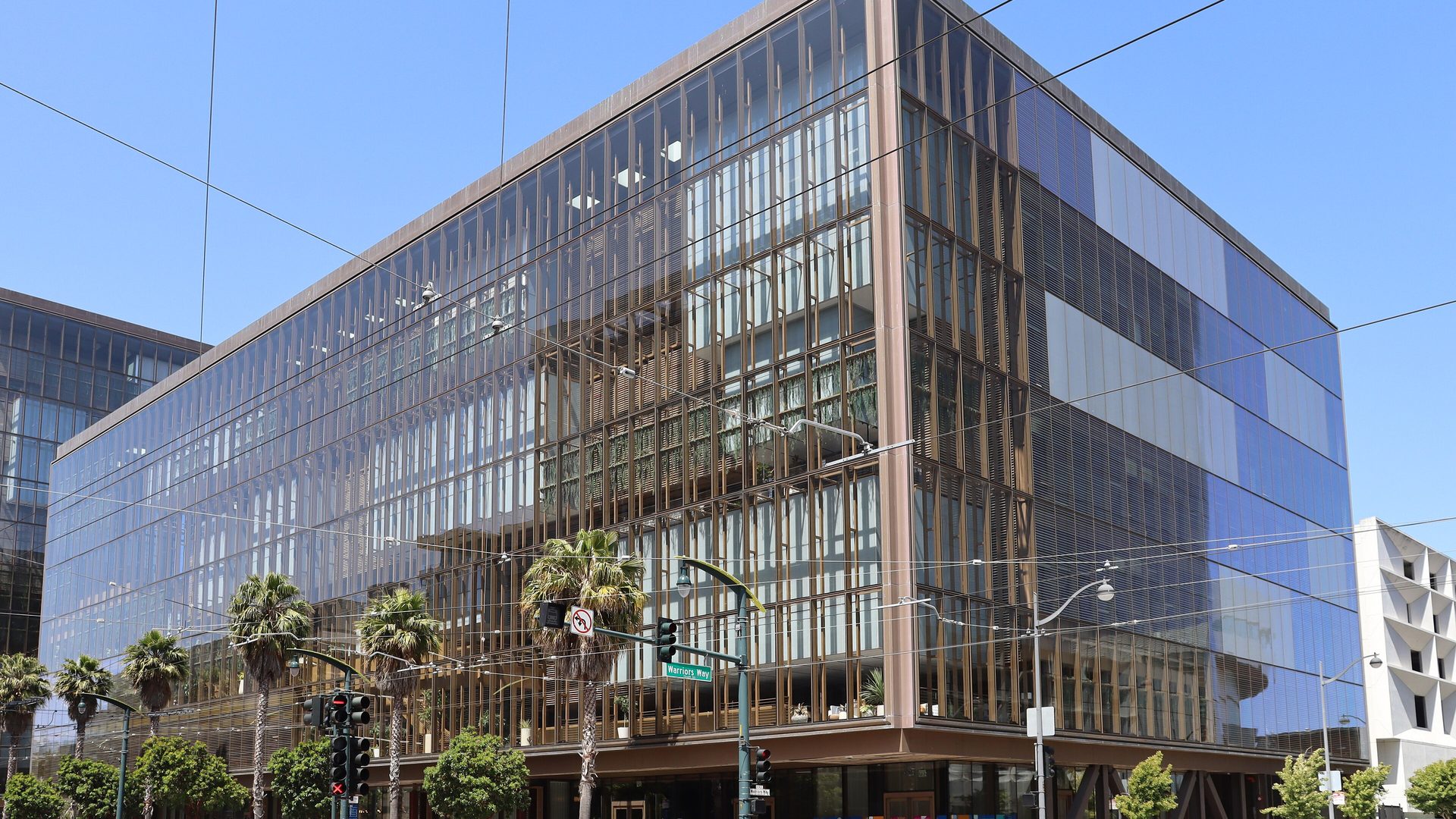
OpenAI math repository on GitHub, Unite.AI, Interesting Engineering, Startup Fortune, Tech Insider, TechCrunch. *Photos: 1515 Third Street (OpenAI headquarters in San Francisco, June 2025) by Coolcaesar, CC BY 4.0, and Fuld Hall, Institute for Advanced Study by Zeete, CC BY-SA 4.0, both cropped and resized.*